Pin and bushing failures account for a massive chunk of unplanned heavy equipment downtime. You might notice a machine stopping entirely because a single linkage component snaps. Selecting correct replacement parts requires deeply understanding specific kinetic stresses. These stresses remain entirely unique to different machine types. While visually similar at a glance, an excavator pin vs loader pin comparison reveals critical structural differences. They differ vastly in metallurgy, dimensional tolerance, and lubrication design. You cannot swap them safely just because they look alike. This comprehensive guide provides a strict procurement and maintenance framework. You will learn how to select the right pin for your fleet. We cover everything from load dynamics to proper installation protocols. Let us explore how the right choices keep your machinery running smoothly, prevent collateral damage, and maximize your operational uptime.
Key Takeaways
Stress Profiles: Excavators generate complex, multi-directional shear forces, while loaders apply high-impact, unidirectional load bearing forces.
Design Variations: Excavator pins frequently require specialized internal grease galleys for articulation, whereas loader pins often prioritize maximized surface hardness against abrasive frontal impacts.
Sourcing Logic: OEM pin options offer guaranteed tolerance compliance, but specialized high-grade aftermarket pins can exceed stock lifecycle performance if metallurgical criteria (e.g., Rockwell Hardness) match the machine's operational demands.
Installation Reality: Even the highest-quality pin will fail prematurely if paired with worn bushings or installed without verifying line-bore alignment.
The Business Cost of Incorrect Linkage Specifications
Calculate the true hourly cost of unplanned stoppage carefully. A snapped or seized pin triggers immediate lost production. Operator wages continue accumulating while the machine sits idle. You also face expensive emergency mechanic dispatch fees. Expedited shipping for heavy replacement parts adds massive freight surcharges. These immediate expenses hurt your project budget severely. It derails carefully planned construction timelines.
Using incorrectly specified linkage components leads directly to collateral damage. A substandard pin causes rapid bushing wear. It accelerates the structural elongation of your linkage bore. Eventually, you face expensive line-boring repairs. These repairs take your machinery out of commission for days. Mechanics must weld the bore hole and machine it back to spec. This process demands specialized equipment. It drains your maintenance budget rapidly.
Establishing rigid metrics for pin selection remains critical for profitability. Base your procurement strategy strictly on Mean Time Between Failures (MTBF). You must look at overall lifecycle value rather than just initial unit price. A cheap part often costs you thousands later in unplanned maintenance. Focus on how many operating hours the component delivers. Track failure rates across different machine models. Documenting these metrics helps you identify unreliable supplier batches. Smart managers build procurement guidelines around historical durability data. They ignore slight price differences on initial purchase orders.
Excavator vs Loader Parts: Operational Kinematics
Different machines subject their linkage components to entirely different forces. Analyzing excavator vs loader parts reveals distinct operational kinematics. You must align component strength to machine application strictly.
Excavators experience highly complex multi-axis articulation continuously. The boom and stick endure massive lateral stress during digging cycles. They constantly handle prying, lifting, and twisting motions in trenching. High breakout forces concentrate heavily on bucket and stick pins. These specific joints need components engineered for dynamic, multi-directional shear strength. The steel must flex slightly under extreme side-loading. If the metal remains too brittle, it shatters under twisting forces.
Loaders face an entirely different kind of punishment daily. They experience high cyclical, unidirectional shock loads. Think of a massive wheel loader ramming repeatedly into dense gravel stockpiles. This violent action requires immense forward impact resistance. Loaders also endure massive vertical load-bearing forces continuously. This happens primarily during heavy bucket lift and carry operations. The linkages support tremendous dead weight over long travel distances.
Cross-purposing pins compromises structural integrity completely. You might find a loader component sharing the exact diameter and length. You still cannot use it safely in an excavator boom. The differing load-bearing expectations dictate completely different internal engineering requirements. A rigid loader pin might snap when subjected to excavator prying forces. Conversely, an excavator pin might deform under frontal loader impacts.
Operational Load Profile Summary
Machine Type |
Primary Stress Type |
Key Operational Forces |
Engineering Priority |
Excavator |
Multi-directional shear |
Prying, twisting, heavy breakout force |
High flexibility under lateral side-stress |
Loader |
Unidirectional shock |
Frontal ramming impact, vertical lifting |
Maximum forward impact resistance |
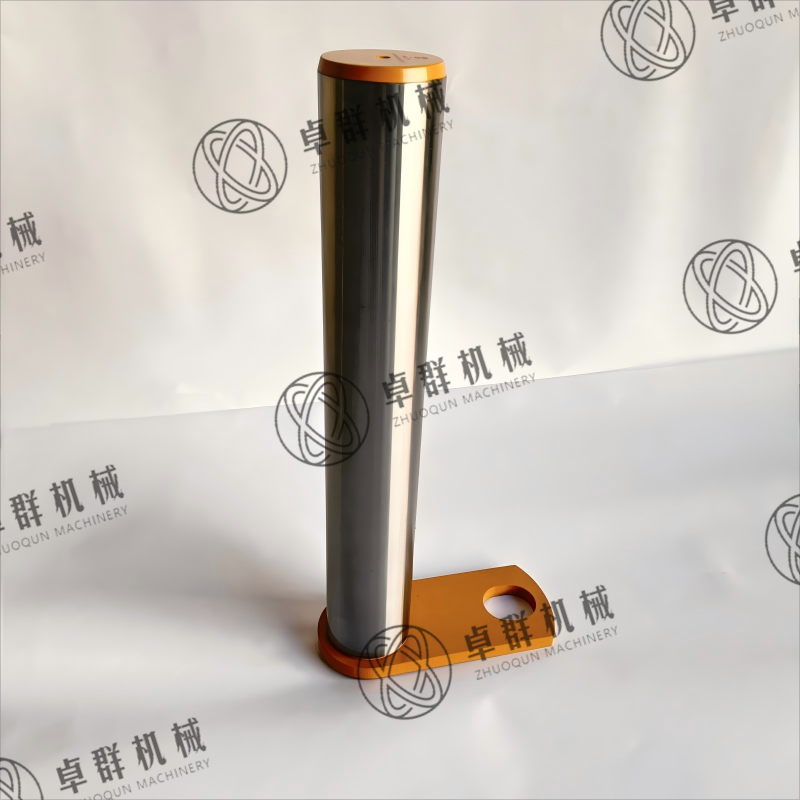
Heavy Machinery Pin Differences: Metallurgy and Engineering
Understanding heavy machinery pin differences requires a deep dive into metallurgy. You must evaluate standard industry alloy steels closely. Manufacturers frequently use 4140 and 4130 alloy steels. The 4140 grade offers higher carbon content. This higher carbon yields superior tensile strength for extreme applications. The 4130 grade provides better weldability and overall toughness. Engineers choose the specific grade based on machine size and intended application.
Heat treatment determines actual field performance and durability. Manufacturers rely on induction hardening or case hardening techniques primarily. Induction hardening heats the outer layer rapidly using electromagnetic fields. Case hardening introduces additional carbon into the surface layer. A quality component must balance high surface hardness perfectly. It needs a Rockwell Hardness (HRC) between 50 and 60 for optimal wear resistance. However, it must retain a softer, highly ductile core. This internal soft core absorbs sudden kinetic shock. It allows the metal to bend slightly without snapping catastrophically.
A direct pins comparison highlights distinct structural variations. We see these differences clearly in lubrication and retention designs.
Lubrication Pathways: Excavator components handle wider degrees of continuous rotation. They require deeper, more complex grease grooves. Their internal galley structures must distribute grease across a broader surface area quickly. Loader components often use simpler groove paths due to limited rotational angles.
Retention Mechanisms: Loaders often utilize heavy flanged pins. These robust flanges handle massive forward impacts securely. They prevent the part from shifting backward during stockpile ramming. Excavators frequently rely on cross-drilled bolt holes. These holes accommodate locking bolts for multi-axis stability. Some larger boom joints utilize heavy-duty snap-ring configurations instead.
Evaluating OEM Pin Options vs. High-Grade Aftermarket
Procurement managers constantly weigh different sourcing avenues carefully. You must compare OEM pin options against high-grade aftermarket alternatives. Each path carries specific operational realities and financial impacts.
Original Equipment Manufacturer (OEM) components provide a very safe baseline.
Pros: They guarantee an exact engineering tolerance match every time. Using them preserves your expensive machine warranty securely. You can expect a highly predictable lifecycle. Dealerships usually stock them for modern machine fleets.
Cons: They demand heavy premium pricing. You pay significantly for the brand name. You might also face extended supply chain lead times. Older machine models often face restricted OEM parts availability.
Premium aftermarket parts present a compelling alternative strategy for fleet managers.
Pros: They offer massive cost efficiency across large fleets. Availability usually remains much higher through independent distributors. You also gain potential for specialized engineering upgrades. Some vendors provide advanced alloys suited for extreme cold weather. Others offer specialized hardened coatings for highly abrasive silica environments.
Cons: You face inherent risks regarding substandard substitute materials. This happens easily if vendors lack transparent metallurgical testing data. Cheap imitations look identical but fail under heavy stress.
Develop a rigid decision framework for your entire fleet. Strictly mandate OEM parts for critical boom and chassis joints. These areas endure catastrophic stress if they fail mid-operation. You can accept high-grade aftermarket components elsewhere. Standard bucket linkages in non-corrosive environments serve as excellent candidates. Always demand testing certificates from aftermarket suppliers before bulk purchasing.
Replacement Guidelines and Risk Mitigation
Proper installation protocols dictate component survival completely. Even a perfectly engineered pin fails under poor installation practices. You cannot shortcut maintenance procedures without severe consequences.
Tolerance verification must happen before inserting anything into the joint. Mechanics must measure bore dimensions using precise micrometers. You cannot guess these sensitive measurements visually. Inserting a brand-new pin into an ovalized bore guarantees rapid failure. The uneven contact points create massive localized stress instantly. The component will wear rapidly on one side and snap. Mechanics should inspect for out-of-round wear patterns diligently.
Mating components deserve equal attention during routine replacement cycles. You should ideally replace pins alongside their corresponding bushings. They function as matched sets inherently within the linkage system. A heavily worn bushing accelerates wear on a pristine metal surface. It forces the new component to carry uneven, shifting loads. Replacing only one half of the joint wastes money long-term.
Establish strict maintenance protocols post-installation to protect your investment. Initial greasing purges harmful microscopic contaminants effectively. It also seats the new component correctly within the housing. Ongoing daily greasing intervals remain strictly non-negotiable. Regular lubrication prevents destructive dry friction from occurring. It flushes out abrasive dirt particles continuously. Proper grease management extends the working life of your linkage system significantly.
Conclusion
The choice between specific linkage styles heavily dictates machinery uptime. Your selection directly impacts overall operational safety and crew productivity. Treating these heavy components as generic steel rods is a dangerous mistake. You must recognize the complex engineering behind every single joint.
Base every purchasing decision on the machine's specific kinetic load. Demand verifiable metallurgical quality from all your suppliers consistently. Ensure rigorous adherence to factory installation tolerances during every repair. Do not compromise on mating component replacement.
Audit your current fleet linkage wear patterns immediately. Check for uneven wear or recurring joint failures. Request detailed material composition spec sheets from your vendors. Ask your current parts vendor to provide this hardness data. This action ensures their products align precisely with your daily operational demands. Protect your fleet by making informed, data-driven procurement choices.
FAQ
Q: Can you use a loader pin in an excavator if the dimensions match?
A: Generally no. Even if diameter and length match, the internal grease pathways, surface hardening depth, and core ductility are engineered for different load directions.
Q: How do you determine the Rockwell Hardness (HRC) required for heavy machinery pins?
A: Requirements vary by joint location, but high-wear linkage pins typically require an HRC between 50 and 60 on the surface, with a softer, tougher core to prevent brittle fracture under shock.
Q: What is the most common cause of premature pin failure?
A: A combination of improper greasing (leading to dry friction and galling) and installing new pins into worn, out-of-round bushings.


