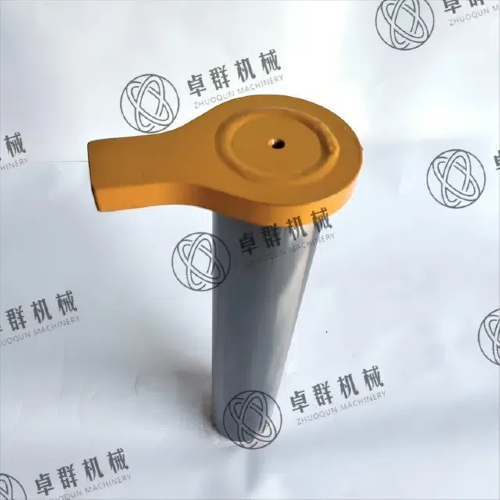
The sudden failure of a single excavator pin shaft can easily halt a multi-million-dollar project. Site managers often face compound financial losses from unscheduled machine downtime and frustrating labor delays. Evaluating proper replacement parts remains a difficult procurement challenge. You must carefully balance upfront component costs against the serious long-term risk of catastrophic shear. Substandard parts also cause accelerated wear to critical structural components like booms, sticks, and buckets.
This article provides a comprehensive technical framework for evaluating material integrity and exact manufacturing tolerances. We will examine how to verify supplier viability to guarantee reliable performance in high-stress environments. Proper component assessment prevents catastrophic failures during heavy load cycles. By understanding these mechanical nuances, you will keep your fleet running smoothly and avoid expensive secondary damages to your valuable machinery.
Key Takeaways
Surface hardness and core toughness must be balanced; over-hardened pins are brittle, while under-hardened pins accelerate bushing wear.
Dimensional tolerances directly impact fitment; poor precision leads to joint play and secondary damage to the excavator arm.
While OEM parts guarantee fit, premium aftermarket parts can offer equal or superior performance if rigorous metallurgical standards are verified.
Proper alignment and strict greasing protocols during installation are just as critical to pin lifespan as the manufacturing quality.
The Business Impact of Excavator Pin Selection
Smart excavator pin selection directly influences project profitability. You cannot afford unexpected equipment breakdowns on tight deadlines. Evaluating components solely on their initial price tag is a dangerous procurement strategy. We must examine the broader financial implications of component failure.
Downtime vs. Component Cost
A standard steel pin costs a fraction of your overall equipment budget. However, heavy machinery downtime costs hundreds or even thousands of dollars per hour. When a joint shears under load, you lose production instantly. Labor crews stand idle while waiting for repairs. You also incur emergency shipping fees for replacement parts. Spending slightly more on premium components acts as affordable insurance against massive operational losses.
Secondary Structural Damage
Substandard pins rarely fail in isolation. They often cause severe premature wear on surrounding components. If a pin lacks proper surface hardness, it grinds aggressively against the bushing. This friction degrades the boss housings on the excavator arm. Once boss housings become ovalized, you face costly line boring repairs. Line boring requires specialized technicians to weld the inner diameter and re-machine it back to factory specifications. This intense repair process takes days and severely impacts your bottom line.
Cost Per Operating Hour
We recommend shifting your evaluation metric away from the simple price per pin. Instead, analyze the cost per operating hour. A cheap component might save you fifty dollars upfront. If it fails twice as fast, your maintenance overhead doubles. You must factor in the labor required for frequent replacements. High-quality parts dramatically extend maintenance intervals. They deliver superior long-term value despite a higher initial purchase price.
Core Evaluation Criteria for Heavy Equipment Pins
Procuring reliable heavy equipment pins requires strict attention to engineering specifications. Visual inspections cannot reveal metallurgical weaknesses. You must evaluate the underlying material science and machining accuracy.
Material Grade and Metallurgy
Manufacturers typically use standard acceptable steels like 40Cr and 42CrMo for high-stress applications. These alloys offer excellent baseline strength when processed correctly. 40Cr works well for standard utility machines. Conversely, 42CrMo contains added molybdenum, providing superior tensile strength for heavy quarry environments. Beyond the chemical composition, internal flaw detection is vital. Reputable suppliers utilize ultrasonic testing on raw steel bars. This non-destructive testing detects internal micro-fissures. Finding these flaws early prevents unexpected component shearing under massive bucket loads.
|
|
|
Common Excavator Pin Steel Grades Comparison |
Steel Grade |
Key Alloy Elements |
Typical Yield Strength |
Best Application Scenario |
40Cr |
Carbon, Chromium |
~785 MPa |
Standard dirt work, utility trenching, lighter loads. |
42CrMo |
Carbon, Chromium, Moly |
~930 MPa |
Rock breaking, quarrying, heavy demolition work. |
Heat Treatment Protocols
Raw steel lacks the durability needed for heavy excavation. Dual-phase heat treatment solves this problem. First, manufacturers apply high-frequency induction hardening to the outer surface. This process achieves a wear-resistant skin, typically measuring between 52 and 60 HRC (Rockwell Hardness Scale). Second, they temper the component in a specialized furnace. Tempering relieves internal stresses and preserves core shock absorption. If a pin is too hard throughout, it shatters like glass upon impact. If it remains too soft, it deforms quickly. Proper heat treatment balances surface wear resistance with core toughness.
Machining Precision and Tolerances
Tight interference fits require micrometer-level dimensional accuracy. Even a millimeter of deviance creates joint play. This loose fitment causes micro-hammering every time the machine changes direction. Over time, micro-hammering destroys the linkage assembly. Furthermore, surface finish requirements dictate grease retention. Engineers measure this roughness using Ra values. A perfectly smooth surface cannot hold lubricant. An optimized surface finish (often around Ra 0.4 to Ra 0.8) retains the protective grease film while minimizing friction against the bronze or steel bushing.
OEM Excavator Pin Guide: OEM vs. Premium Aftermarket
Equipment owners constantly debate the merits of original equipment manufacturer (OEM) parts versus aftermarket alternatives. Consulting a reliable OEM excavator pin guide helps clarify this complex purchasing decision.
The Case for OEM
OEM parts provide a guaranteed baseline of quality. They adhere to exact factory specifications engineered for your specific machine model. Purchasing OEM simplifies warranty claims significantly. If an original part fails, the dealer network usually resolves the issue quickly. We highly recommend OEM replacements for brand-new machines currently operating under an active factory warranty. Using factory parts eliminates any risk of a dealership denying a larger hydraulic or structural claim.
The Case for Premium Aftermarket
Premium aftermarket suppliers present a compelling alternative. They offer substantial cost savings, often ranging between 30% and 50% below dealer pricing. Availability is another massive advantage. Dealerships frequently suffer from backordered inventory. Independent suppliers often warehouse massive inventories locally. Surprisingly, many top-tier aftermarket suppliers actually manufacture the components for the big OEM brands. You frequently get the exact same metallurgical quality without paying the steep brand markup.
Identifying Subpar Aftermarket Parts
The aftermarket landscape contains risks. You must identify warning signs of subpar manufacturing. Heavily discounted pricing usually indicates cut corners in heat treatment or material sourcing. Inspect the components carefully upon arrival. Look for inconsistent chamfers on the edges. Poorly machined grease galleys restrict lubricant flow, leading to rapid dry wear. Always demand material certificates. If a supplier cannot provide metallurgical documentation, you should avoid their products entirely.
OEM vs. Premium Aftermarket Comparison Chart |
Evaluation Metric |
OEM Parts |
Premium Aftermarket Parts |
Initial Cost |
Highest price premium. |
Moderate price (30-50% savings). |
Warranty Safety |
Keeps factory machine warranty intact. |
May complicate existing factory warranties. |
Availability |
Subject to dealer network backorders. |
Often stocked locally for rapid dispatch. |
Quality Variance |
Highly consistent globally. |
Requires strict supplier verification. |
Decision Framework
Choose your procurement path based on three factors. First, consider the machine lifecycle stage. Older machines outside warranty benefit greatly from aftermarket savings. Second, evaluate application severity. Standard dirt digging tolerates minor variances better than brutal quarry rock breaking. Finally, assess supplier transparency. Trust partners who openly share their engineering data and manufacturing processes.
Assessing Supplier Reliability and Quality Assurance
Your supply chain is only as strong as its weakest vendor. Evaluating supplier reliability requires due diligence before placing bulk orders.
Request Documentation and Traceability: Always require mill test certificates. These documents prove the chemical composition of the raw steel. You should also request heat treatment logs. These logs verify the depth and consistency of the induction hardening process. Transparency here is non-negotiable.
Evaluate Inventory and Lead Times: A supplier's ability to minimize your downtime is critical. Ask about their local warehousing capabilities. Do they offer rapid dispatch for emergency breakdowns? A reliable partner maintains deep stock levels of common sizes to keep your fleet moving.
Analyze Warranty and Support Terms: Read the fine print regarding failure liability. Determine if the warranty covers only the physical pin itself. Does it acknowledge secondary damage caused by verified manufacturing defects? Strong support terms indicate a manufacturer's confidence in their own engineering.
Pin Installation Tips and Maintenance Realities
Perfect manufacturing means nothing if installation procedures fail. Following proper pin installation tips maximizes component lifespan and protects your heavy machinery.
Preparation and Alignment
Ensure all boss housings are meticulously clean before starting. Remove all dirt, old grease, and rust scale using a wire brush and solvent.
Verify perfect alignment of the boom or stick elements. Utilize guide pins or alignment bars to center the heavy structural components safely.
Never force a misaligned pin using heavy sledgehammers. Forcing it risks immediate galling on the surface. It can also create invisible micro-fractures in the steel structure.
Simultaneous Replacement
We strongly recommend replacing pins and bushings together as a mated pair. Old bushings wear unevenly, developing an oval shape. Running a brand-new, perfectly round cylinder inside a worn, ovalized bushing is a costly mistake. The contact surface area shrinks dramatically. This misalignment concentrates immense stress on a very small pressure point. Consequently, the new component will suffer accelerated wear exponentially, ruining your investment in weeks.
Lubrication Protocols
Verify the grease groove alignment perfectly matches the zerk fittings on the boss housing. If the holes do not align, grease cannot reach the critical friction zones.
Establish strict initial greasing procedures before putting the machine under any load. Pump high-moly grease into the joint until you see fresh lubricant purging evenly from both sides.
Maintain a consistent daily lubrication schedule, especially during the first fifty hours of break-in operation.
Conclusion
Securing the right components requires a strategic approach to heavy equipment maintenance. You must prioritize verified metallurgy and dimensional precision over the initial purchase price. The hidden costs of downtime and secondary structural repairs far outweigh the minor savings of buying cheap, unverified steel. A well-manufactured component balances intense surface hardness with vital core toughness.
We recommend building long-term relationships with suppliers who provide transparent technical data. Good partners understand the specific load requirements of your fleet and will guide you toward the proper steel grades. They will proudly share their heat treatment logs and mill test certificates to earn your business.
Your next step is clear. Audit your current replacement intervals immediately. Identify any premature wear patterns in your boom and bucket joints. Cross-reference these failures with your current vendor's material specifications before ordering your next batch of inventory.
FAQ
Q: How often should I grease a new excavator pin shaft?
A: You must grease a new joint immediately after installation. During the initial break-in period, apply grease daily to ensure proper distribution across the bushing. Once broken in, adjust the schedule based on load severity. Standard dirt work may require greasing every 50 hours. Heavy rock quarry applications demand daily lubrication to flush out abrasive dust and maintain the fluid film.
Q: Can I replace just the pin without replacing the bushing?
A: We strongly advise against this practice. Worn bushings develop an ovalized internal shape over time. If you insert a perfectly cylindrical new part into an egg-shaped bushing, the contact area shrinks dramatically. This concentrates immense stress on a narrow line, causing accelerated wear and galling. Always replace them as mated pairs.
Q: What is the difference between induction-hardened and case-hardened pins?
A: Induction hardening uses high-frequency electromagnetic fields to rapidly heat and quench the surface. It provides a deep, localized hardened layer ideal for resisting extreme friction. Case hardening infuses carbon into the steel surface in a furnace, creating a shallower outer skin. For heavy excavators, manufacturers prefer induction hardening. It delivers superior depth while leaving the inner core tough enough to absorb shocks.
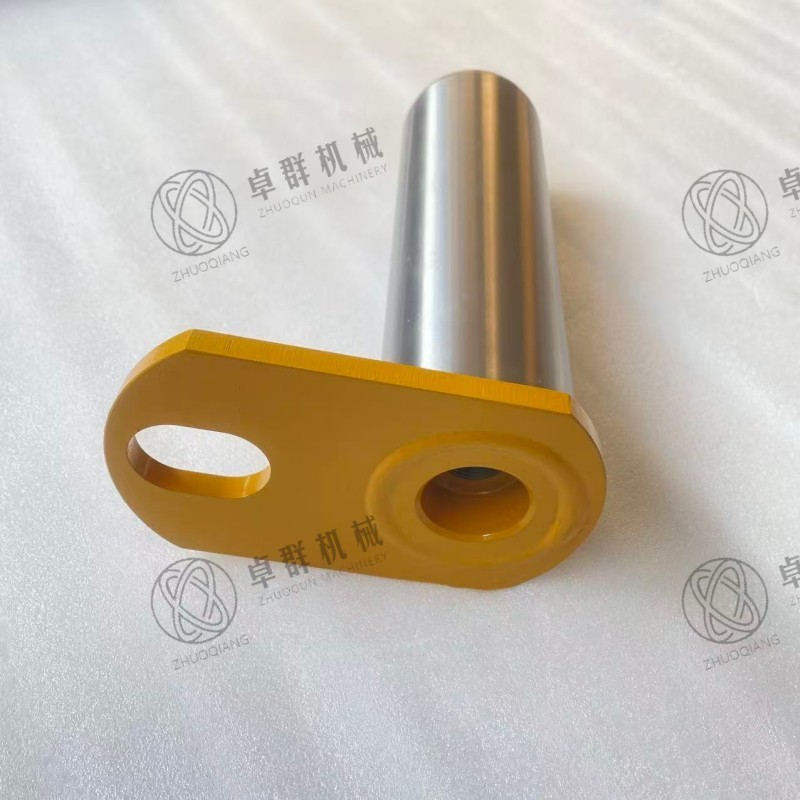
Q: How do I measure an excavator pin for a replacement order?
A: You need four exact measurements for a precise fit. First, measure the outer diameter using digital calipers. Second, determine the overall end-to-end length. Third, measure the usable length, which is the distance between the retaining flag and the opposite end. Finally, pinpoint the exact location of the grease hole or zerk fitting thread to ensure proper lubrication alignment.