
+86-17692703999
+86-17692703999 No. 6, West Side Auxiliary Road,
Sunshine Street, Linxi County, Xingtai
City, Hebei Province
Sunshine Street, Linxi County, Xingtai
City, Hebei Province

Views: 0 Author: Site Editor Publish Time: 2025-12-01 Origin: Site

Pin shafts and bushings are essential components in machinery, each serving a unique role. A pin shaft is a cylindrical rod that connects or pivots moving parts in equipment like loaders or excavators, handling high loads and stress. Bushings, on the other hand, are sleeves that reduce friction between parts, typically made from materials like rubber or bronze, and are found in joints, axles, and bearings.
The purpose of comparing pin shafts and bushings is to evaluate their performance, durability, and suitability for different equipment. Pin shafts excel in load-bearing applications where strength is crucial, while bushings are better for reducing friction and absorbing shock in moving parts. Understanding when to use each part can help improve equipment efficiency, extend its lifespan, and reduce maintenance costs.
A pin shaft is a cylindrical metal component used to connect or pivot moving parts in machinery. Made from durable materials like steel or alloy, pin shafts are designed to handle high loads and stresses while allowing parts to move without direct friction.
The primary function of a pin shaft is to serve as a pivot or connection point between two moving parts. It enables controlled motion while keeping parts securely attached. In construction equipment, pin shafts are crucial for smooth movement at joints, levers, or pivot points, aiding in functions like lifting, digging, or swinging.
Pin shafts are commonly found in heavy machinery such as loaders, excavators, and bulldozers. They are used in bucket attachment points, boom and arm joints, and undercarriage components. Pin shafts help absorb shock and reduce wear at key connection points, ensuring efficient operation.
A bushing is a mechanical component made from materials like bronze, steel, or composites. It serves as a liner or bearing between moving parts to reduce friction, wear, and damage in machinery. Bushings are commonly used in applications where parts move relative to each other but would otherwise cause excessive friction and wear.
Bushings act as a bearing surface between two moving parts, such as a shaft and its housing. Their main function is to reduce friction, absorb shock, and distribute the load evenly across surfaces. This prevents damage to both the shaft and housing, extends the life of components, and ensures smooth movement.
Bushings are widely used in various systems, including:
Bearings: Reducing friction between moving parts like shafts and housings.
Axles: Supporting axle shafts and minimizing friction.
Rotating Components: Supporting parts like gears, pulleys, and sprockets to ensure smooth operation.
Suspension Systems: Cushioning and supporting parts in vehicle and equipment suspension systems.
When comparing pin shafts and bushings, it's crucial to assess their performance in various operating conditions, focusing on material properties, wear resistance, and load-bearing capacity.
Pin Shafts:
Pin shafts are often made from steel, stainless steel, or alloy steel. Steel offers strength and wear resistance, while stainless steel provides corrosion resistance, ideal for harsh environments.
Bushings:
Bushings are made from materials like bronze, rubber, composites (PTFE, PEEK), and steel. Bronze bushings are durable and corrosion-resistant, rubber bushings offer shock absorption, and composite bushings are used for low friction and high wear resistance.
Pin Shafts:
Pin shafts have good abrasion resistance but can still wear under high pressure or extreme temperatures. Pitting or scoring may occur without proper lubrication.
Bushings:
Bushings, especially bronze and composites, excel in wear resistance by reducing metal-to-metal contact. Rubber bushings, however, wear faster under heavy loads or high temperatures.
Pin Shafts:
Pin shafts handle heavy loads well and distribute force evenly, making them suitable for high-impact applications. Steel pin shafts offer superior load support compared to bushings.
Bushings:
While bushings assist in load distribution and shock absorption, they are generally less capable of bearing extreme loads. For high-load applications, pin shafts are more durable.
Pin Shafts:
Pin shafts, especially those made from stainless steel or alloy, perform well under extreme conditions, handling high pressure and temperature changes.
Bushings:
Bushings excel in environments where vibration dampening and low friction are important. Rubber bushings absorb shocks and vibrations, but degrade faster under heavy stress or high temperatures.
When comparing pin shafts and bushings, it’s essential to assess both their initial costs and long-term maintenance and replacement expenses.
Pin Shafts:
Pin shafts typically have higher upfront costs due to the use of durable materials like steel or stainless steel, and the precision required in manufacturing. These components are generally designed for heavy-duty applications, which adds to their cost.
Bushings:
Bushings are less expensive initially. They are made from materials like rubber, bronze, or composite, and are more cost-efficient to produce. While high-quality bushings can cost more, they are still generally cheaper than pin shafts, especially in smaller machinery.
Pin Shafts:
Pin shafts usually require less frequent replacement and maintenance, especially when properly lubricated. Their longer lifespan makes them more cost-effective in the long run. However, they still need routine checks for wear and alignment.
Bushings:
Bushings tend to need more frequent replacement due to wear, especially in high-stress environments. While they may cost less upfront, ongoing maintenance and frequent replacements can add up, making them more expensive over time, particularly in demanding applications.
Pin Shafts:
Pin shafts are more durable and can last longer under heavy loads, making them a better investment for long-term use. Their higher initial cost is often offset by the reduced frequency of replacement.
Bushings:
While cheaper initially, bushings have a shorter lifespan and are more prone to wear. In high-load applications, they may need regular replacements, resulting in higher long-term costs compared to pin shafts.
Pin Shafts: Higher upfront cost, but lower long-term maintenance and replacement costs, making them more cost-effective for heavy-duty applications.
Bushings: Lower initial cost, but more frequent replacements and maintenance, which could lead to higher costs over time, especially in demanding conditions.
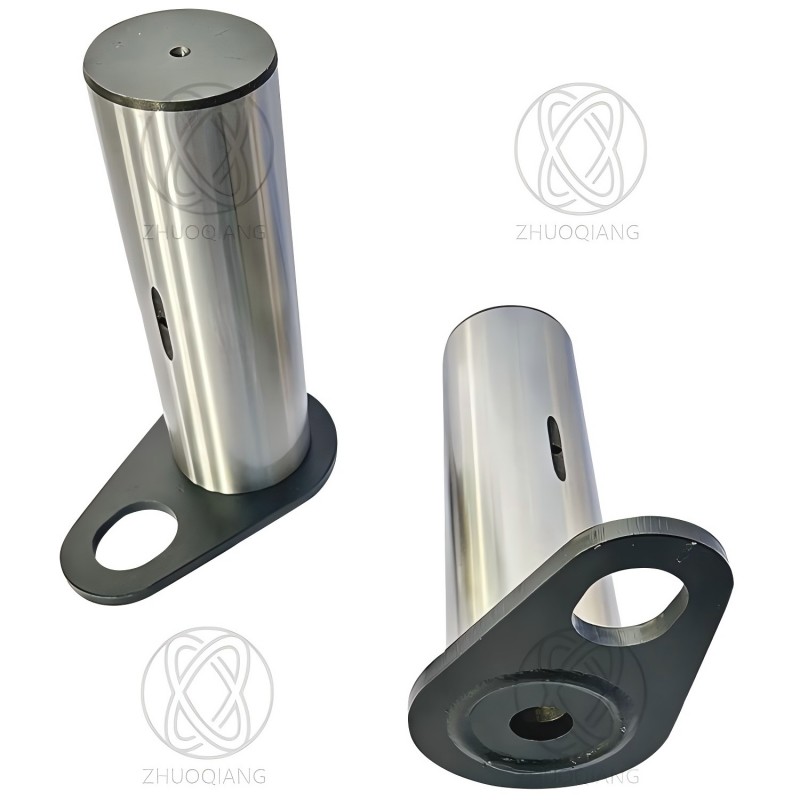
Pin shafts are typically the better choice for high-stress environments where greater strength and rigidity are essential. In heavy machinery like excavators, loaders, and construction equipment, pin shafts can withstand extreme loads, high pressure, and harsh conditions without compromising their structural integrity. They are designed to handle the constant wear from heavy-duty operations, making them more suitable for demanding tasks where durability is a priority.
Pin shafts are crucial in mechanical joints and pivot points that require a stronger connection for rotation or movement. They are commonly used in larger, more complex machines, where parts need to pivot smoothly under substantial stress. For example, in the bucket or arm pivot points of construction equipment, pin shafts provide the necessary rigidity and resistance to bending or breaking, which is critical for maintaining operational efficiency.
Bushings are ideal when the goal is to reduce friction between two moving parts. In systems where parts experience moderate loads or where low friction is essential for smooth operation, bushings offer an effective solution. They are commonly used in smaller machines or areas where precise movement is more important than heavy load-bearing. For example, bushings are often found in bearings, axles, or pivot points in machinery that doesn’t face the same extreme stress as larger equipment.
Bushings are also useful in applications where vibration dampening and noise reduction are critical. Bushings made of materials like rubber or composites can absorb vibrations and reduce operating noise, making them ideal for situations where comfort and quiet operation are desired. In construction equipment with hydraulic systems or smaller machinery where reducing wear on parts due to vibration is essential, bushings help maintain smooth operation and prolong the lifespan of components.
Pin shafts are typically rigid and used for rotational movement or support, while bushings are used to reduce friction between two moving parts and absorb shock or vibration.
Pin shafts are generally more durable in high-pressure environments because of their rigid structure and ability to handle heavy loads. Bushings are more suitable for reducing friction but may wear out faster under heavy loads.
Yes, pin shafts and bushings are often used together. For example, apin shaft might be inserted into a bushing to create a smooth, low-friction pivot point in machinery.
Pin shafts should be replaced when they show signs of cracks, deformation, or excessive wear. Bushings need to be replaced when they show signs of scoring, cracking, or material breakdown.
When deciding between a pin shaft and a bushing, consider the specific needs of your equipment. Pin shafts are stronger and more rigid, making them ideal for high-stress applications and heavy-duty machinery that require durable, load-bearing components like pivot points. However, they can be more expensive and need regular maintenance.
Bushings, on the other hand, are cost-effective and excellent for reducing friction and vibrations in smaller, lower-load systems. They’re best for applications where smooth movement and noise reduction are key, but they wear out faster under heavy use.
For heavy machinery like excavators or loaders, pin shafts are often the better option due to their strength and durability. For smaller equipment or tasks that prioritize smooth operation, bushings are typically more suitable. The right choice depends on your equipment’s load and operating conditions.


