
+86-17692703999
+86-17692703999 No. 6, West Side Auxiliary Road,
Sunshine Street, Linxi County, Xingtai
City, Hebei Province
Sunshine Street, Linxi County, Xingtai
City, Hebei Province

Views: 0 Author: Site Editor Publish Time: 2025-12-29 Origin: Site

When selecting components for your machinery, understanding the difference between sleeve bearings and bushings is crucial. Both play essential roles in reducing friction, but their applications vary. In this article, we will explore the key differences between sleeve bearings and bushings, helping you choose the right component for your specific needs. You’ll learn how to select based on load, speed, and space requirements.
A sleeve bearing is a cylindrical, plain bearing designed to support a rotating shaft. Unlike rolling-element bearings (such as ball or roller bearings), sleeve bearings rely on sliding motion to reduce friction. This makes them simpler and more cost-effective for many applications.
Sleeve bearings reduce friction by creating a thin layer of lubricant between the shaft and the bearing surface. This design works well in low- to moderate-speed applications, where high precision or extreme load handling isn't required.
Sleeve bearings come in various designs, each suited for specific applications.
Plain Sleeve Bearings: These are the most common type of sleeve bearings. They are simple cylindrical sleeves that allow for smooth sliding motion between a shaft and its housing.
Flanged Sleeve Bearings: Similar to plain sleeve bearings but include a flange at one end to prevent axial movement. This design provides added support and is commonly used in applications where axial load resistance is needed.
Thrust Sleeve Bearings: These bearings are designed to handle axial loads, ensuring the stability of rotating shafts in applications where significant axial forces are present.
Sleeve bearings can be made from various materials, each chosen based on the specific requirements of the application:
Bronze: Bronze sleeve bearings are durable, resist corrosion, and are ideal for high-load, high-speed applications.
Steel: Steel is often used for high-strength sleeve bearings, particularly in heavy-duty machinery.
Composites: Modern composite materials, such as PTFE (polytetrafluoroethylene), are used in sleeve bearings for applications that require low friction and reduced maintenance.
Material selection directly impacts the bearing's durability, load capacity, and lubrication requirements.
A bushing is a simple cylindrical component that fits into a hole or housing to reduce friction between a shaft and its supporting structure. While a bushing is a type of sleeve bearing, it is generally smaller and used for lighter applications. Bushings are designed to reduce friction by using sliding contact rather than rolling elements.
Unlike sleeve bearings, which may handle higher loads over longer distances, bushings are more commonly used in situations where precise alignment is needed within a confined space.
Plain Bushings: These are the most common type of bushing, often made from materials like bronze or plastic. They provide a low-friction interface between a rotating shaft and a fixed housing.
Flanged Bushings: These bushings have a flange at one end to help with axial positioning. They are commonly used when axial stability is required.
Composite Bushings: Made from advanced materials like PTFE or POM (polyoxymethylene), composite bushings are often self-lubricating, reducing the need for frequent maintenance.
Bushings are widely used in applications like automotive suspension systems, heavy machinery, and even household appliances. They are ideal for reducing friction in environments with moderate loads and low speeds.
Bushings are particularly advantageous in applications that require noise reduction or shock absorption, such as in vehicle suspensions or conveyor systems.
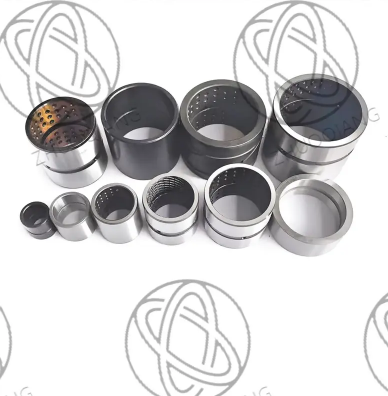
| Feature | Sleeve Bearings | Bushings |
|---|---|---|
| Design & Structure | Longer and more robust, supporting shafts over a larger surface area. | Shorter, fits into specific holes or pivot points, primarily for friction reduction. |
| Surface Area | Larger surface area for continuous support. | Smaller contact area, typically for confined spaces. |
| Load Handling | Suited for moderate to high loads over long distances. | Ideal for high-load, low-speed applications, especially in confined spaces. |
| Speed | Handles higher speeds (up to 20,000 RPM or more). | Best for low-speed, oscillating or non-rotational motion. |
| Application Type | Suitable for continuous rotation applications, such as motors, pumps, HVAC systems. | Used in shorter, confined spaces like automotive suspension systems, small machinery. |
| Lubrication | Requires lubrication (oil, grease, or self-lubricating materials like PTFE). | Often self-lubricating, reducing maintenance and ideal for dry or challenging lubrication environments. |
| Maintenance | Requires regular maintenance to ensure optimal performance. | Low maintenance, especially with composite or self-lubricating bushings. |
| Load Capacity (example) | Can support up to 50,000 N (depending on the material and application). | Typically supports up to 10,000 N, ideal for shock absorption. |
| Operating Temperature | Can handle temperatures ranging from -50°C to 150°C. | Typically handles a temperature range of -30°C to 120°C. |
| Cost | Generally higher due to materials and maintenance needs. | More cost-effective, especially for smaller, less complex applications. |
| Key Notes | Ideal for continuous rotation with high loads and higher speeds. Requires more maintenance and lubrication. | Best for low-speed, high-load, shock-absorbing applications. Self-lubricating and low maintenance. |
Sleeve bearings are cost-effective, as they are generally more affordable than rolling-element bearings. Many sleeve bearings are self-lubricating, which reduces the need for frequent maintenance, making them a low-maintenance option. Additionally, sleeve bearings operate more quietly than ball bearings, making them ideal for applications where noise reduction is important.
Electric Motors: Sleeve bearings are commonly used to support the shaft in electric motors, where low speed and light to moderate load conditions exist.
HVAC Systems: In fans and blowers, sleeve bearings reduce friction and noise while ensuring reliable performance.
Pumps: Sleeve bearings are often used in pumps to support the shaft and prevent wear in low-speed, low-load applications.
Different materials affect the performance and maintenance needs of sleeve bearings. For example, composite materials like PTFE offer reduced friction and minimal maintenance, while bronze sleeve bearings may require regular lubrication and are better suited for high-load applications.
In the automotive industry, bushings are commonly used in suspension systems to reduce vibration and noise, while sleeve bearings are utilized in engine components, such as alternators and water pumps, where continuous rotation is required for smooth operation.
In industrial machinery, sleeve bearings are ideal for motors, pumps, and fans due to their high-speed capabilities. Bushings are used in machines requiring shock absorption, like conveyors and presses, to handle high-load, low-speed applications efficiently.
In aerospace applications, sleeve bearings are crucial for turbine engines and gearboxes, providing reliable, high-speed performance under extreme conditions. Bushings are used in aircraft landing gear and control systems, offering durability and impact resistance in demanding environments.
Bronze, steel, and composites are common materials used in both bushings and sleeve bearings, each offering unique benefits. Bronze is valued for its durability, corrosion resistance, and strength under high load conditions. Steel, on the other hand, offers high strength and is ideal for heavy-duty applications. Composites like PTFE are known for their low friction, self-lubricating properties, and resistance to wear, making them suitable for demanding, low-maintenance environments.
Selecting the right material for bushings and sleeve bearings involves assessing the specific needs of the application. High-load applications, such as industrial machinery, benefit from the strength and durability of steel. For low-speed, low-load environments, materials like PTFE or other composite materials are ideal due to their low friction and self-lubricating properties. Additionally, environmental factors like temperature, humidity, and exposure to chemicals should be considered when choosing the material.
| Aspect | High-Performance Materials (e.g., PTFE) | Cost-Effective Materials (e.g., Bronze, Steel) |
|---|---|---|
| Friction Reduction | Excellent at reducing friction, leading to minimal wear. | Moderate friction reduction, suitable for less demanding applications. |
| Wear Resistance | Superior wear resistance, ideal for high-precision applications. | Sufficient wear resistance for general applications. |
| Durability | High durability, especially in harsh conditions. | Durable but less suitable for extreme conditions. |
| Maintenance | Requires less maintenance due to self-lubricating properties. | May require regular maintenance, especially for lubrication. |
| Cost | Higher cost due to advanced materials and properties. | More affordable, suitable for budget-conscious applications. |
| Applications | Best for high-precision, high-load, or hard-to-maintain environments. | Ideal for general-purpose applications with moderate load and speed. |
Sleeve bearings and bushings are essential components in machinery, each with distinct characteristics suited to different applications. Sleeve bearings excel in high-speed applications that require continuous support, while bushings are ideal for low-speed, high-load scenarios, particularly where space is constrained. When selecting the right component, consider the specific needs of your application, including load, speed, space, and maintenance. Shanghai Fenghua International Enterprise Co., Ltd. offers high-quality bearings and bushings tailored to meet your unique requirements, ensuring reliable and efficient performance in various industries.
A: A sleeve bearing is a cylindrical component that supports a rotating shaft, relying on sliding motion to reduce friction. A bushing is smaller and typically used for lighter applications, primarily for friction reduction in confined spaces.
A: Use a sleeve bearing for high-speed applications requiring continuous support. Choose a bushing for low-speed, high-load situations, especially in confined spaces or where shock absorption is needed.
A: Sleeve bearings are generally more affordable than rolling-element bearings but may require more maintenance than bushings, which are often self-lubricating and low maintenance.
A: Bushings are ideal for high-load, low-speed applications. However, sleeve bearings can handle higher speeds and are better suited for continuous rotation with moderate to high loads.


