
+86-17692703999
+86-17692703999 No. 6, West Side Auxiliary Road,
Sunshine Street, Linxi County, Xingtai
City, Hebei Province
Sunshine Street, Linxi County, Xingtai
City, Hebei Province

Views: 0 Author: Site Editor Publish Time: 2026-01-01 Origin: Site

A sleeve coupling for shaft is crucial for mechanical power transmission systems. It efficiently connects two rotating shafts, ensuring smooth power transfer. Known for its simplicity and cost-effectiveness, it’s ideal for various industries. In this article, we will explore the types, functionality, and advantages of a sleeve coupling for shaft. You'll learn how it handles misalignments and how to choose the right type for your application.
A sleeve coupling, also called a muff coupling, is a mechanical connector used to link two shafts. It is essentially a hollow cylindrical tube, designed to slide over the shaft ends and transmit rotary motion. The coupling can be secured in place using keys, set screws, or other fasteners to prevent slippage and ensure a reliable connection.
The sleeve coupling is particularly effective when the shafts are perfectly aligned. Its straightforward design makes it an economical choice for many applications.
The construction of a sleeve coupling involves a thick, hollow tube made from durable materials like cast iron or steel. The internal diameter of the sleeve is precisely machined to match the external diameter of the shafts. This ensures a tight fit, facilitating efficient power transfer.
To secure the coupling, a sunk key or set screws are often used. These locking mechanisms prevent the shafts from moving relative to the sleeve, ensuring that torque is transmitted without loss of energy.
The rigid sleeve coupling is the simplest form of sleeve coupling. It features a single-piece sleeve that requires perfect alignment between the shafts. This type is ideal for applications where there is no room for misalignment and where high torque transmission is not required.
However, the rigid sleeve coupling has limitations. It cannot accommodate any misalignment between the shafts. If the shafts are not perfectly aligned, it can cause undue stress on the connected equipment, leading to premature wear.
Flexible sleeve couplings are designed to absorb misalignments between the shafts. They feature an elastomeric (rubber) insert between two metal hubs, which helps to dampen vibrations and absorb shocks. This flexibility allows the coupling to accommodate parallel, angular, and axial misalignments, protecting connected equipment from the stresses caused by misalignment.
Flexible sleeve couplings are commonly used in applications where shafts are not perfectly aligned or where shock absorption is crucial.
A split sleeve coupling, also known as a clamp coupling, consists of a sleeve that is split into two halves. These halves can be bolted together to form the coupling. This design allows for easy installation and removal without disturbing the alignment of the shafts. Split sleeve couplings are commonly used in systems where frequent maintenance or shaft repositioning is required.
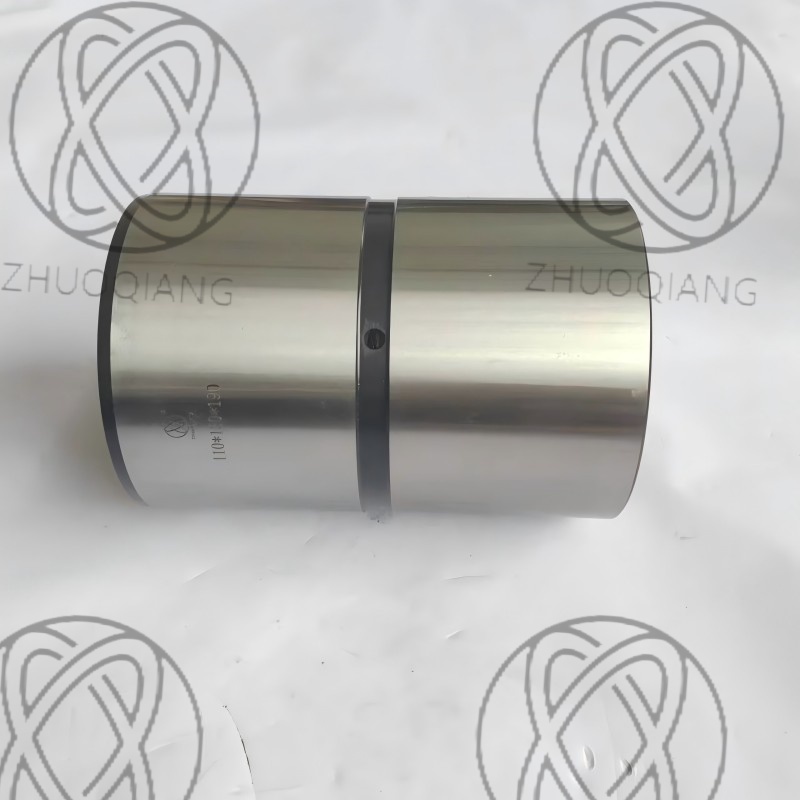
A sleeve coupling transmits torque from one shaft to another by locking the shafts together. The sleeve fits over the ends of the shafts, and torque is transferred through the connection. To ensure that the shafts rotate together without slippage, a key or set screw is used to lock them in place.
For optimal torque transmission, the coupling must have a secure fit. Any slippage or misalignment can result in energy loss and decreased efficiency.
One of the main advantages of sleeve couplings is their ability to handle minor misalignments, especially in flexible versions. While rigid sleeve couplings require precise alignment, flexible couplings can absorb misalignment caused by shifts in temperature, vibration, or structural movement.
Flexible sleeve couplings can handle:
Parallel misalignment: When the shafts are offset horizontally or vertically.
Angular misalignment: When the shafts are at an angle to each other.
Axial misalignment: When the shafts shift along their axis due to thermal expansion or other factors.
This flexibility allows sleeve couplings to protect equipment from the stress caused by misalignment, extending the service life of connected machinery.
Flexible sleeve couplings excel in dampening vibrations and absorbing shocks. This ability is especially important in systems that experience fluctuating loads or high levels of vibration. By absorbing shock loads, the coupling reduces the impact on the shafts and other connected components, helping to preserve the integrity of the machinery.
Tip: For applications that require high shock and vibration resistance, consider using flexible sleeve couplings with elastomeric inserts.
One of the biggest advantages of sleeve couplings is their cost-effectiveness. Their simple design makes them affordable, and in many cases, maintenance-free. Elastomeric sleeve couplings, in particular, are often maintenance-free, reducing downtime and the need for frequent inspections.
The lack of lubrication requirements in many sleeve couplings makes them especially attractive for low-maintenance applications. This, combined with their straightforward installation, makes them a highly economical choice for many industries.
Tip: When cost efficiency and low maintenance are top priorities, elastomeric flexible sleeve couplings are an excellent option.
Sleeve couplings are commonly used in industrial applications such as:
Pumps: Connecting the motor and pump shaft for efficient power transmission.
Compressors: Ensuring smooth operation by coupling the compressor motor to the shaft.
Fans: Transmitting power to fan blades while accommodating misalignments.
Conveyors: Linking motor and conveyor shafts to transmit torque.
In these applications, sleeve couplings help maintain smooth, reliable operation while reducing wear and tear on connected components.
In the automotive and construction industries, sleeve couplings are used in applications such as:
Drive shafts: Connecting the motor to the drive mechanism in vehicles.
Cranes and Excavators: Transmitting torque in heavy-duty construction machinery.
The ability of sleeve couplings to handle moderate to high torque and absorb misalignments makes them ideal for demanding environments.
When selecting the right sleeve coupling for your application, consider the following key factors to ensure optimal performance and equipment longevity.
| Factor | Details | Data/Examples | Scientific Comparison |
|---|---|---|---|
| Torque Requirements | Ensure the coupling can handle the required torque for your system. | Example: A sleeve coupling in a pump system needs to handle 150 Nm torque. | Rigid Coupling: Best for low to medium torque (up to 500 Nm). Flexible Coupling: Suitable for higher torque with shock absorption, up to 2,000 Nm. |
| Misalignment Tolerance | Choose between rigid or flexible couplings based on misalignment in your system. | Example: In a conveyor system, shafts are misaligned by 2 degrees. Flexible sleeve couplings can absorb this misalignment. | Rigid Coupling: Requires precise alignment, can only tolerate <0.5 mm misalignment. Flexible Coupling: Can accommodate up to 3 mm parallel, 2° angular misalignment. |
| Environmental Conditions | Consider temperature, vibration, and other environmental factors affecting the coupling's performance. | Example: A sleeve coupling in a motor system operating in a factory with high temperature (70°C) and vibration. | Flexible Coupling: More suited for environments with temperature extremes (up to 100°C) and high vibrations. Rigid Coupling: Less adaptable to extreme temperatures and vibrations, suitable for stable, controlled environments. |
Tip: Choose a coupling that fits the environmental and torque needs of your system to enhance stability and extend equipment life.
| Factor | Rigid Sleeve Coupling | Flexible Sleeve Coupling |
|---|---|---|
| Alignment Requirements | Requires perfect alignment between shafts. | Can accommodate misalignments (parallel, angular, and axial). |
| Misalignment Tolerance | Tolerates <0.5 mm misalignment. | Tolerates up to 3 mm parallel, 2° angular misalignment. |
| Torque Capacity | Best for low to medium torque applications, up to 500 Nm. | Suitable for medium to high torque, can handle up to 2,000 Nm with shock absorption. |
| Shock and Vibration | Not designed to absorb shock or vibration. | Excellent at absorbing shocks and vibrations, protecting connected equipment. |
| Cost and Maintenance | Typically lower cost and lower maintenance requirements. | Slightly higher cost but maintenance-free in most elastomeric designs. |
| Environmental Conditions | Suited for stable, controlled environments with minimal vibration and temperature fluctuation. | Ideal for environments with temperature extremes (up to 100°C) and high vibration. |
| Installation | Requires precise installation and alignment of shafts. | Easier to install in systems with minor misalignments, compensates for shaft displacements. |
| Durability | Limited durability in applications with misalignment. | More durable in dynamic and high-vibration environments. |
| Applications | Best for systems with perfect alignment, e.g., pumps, conveyors, and motors in controlled settings. | Best for systems with misalignment or shock load, e.g., compressors, fans, heavy-duty machinery. |
Tip: For applications prone to misalignment or varying loads, flexible sleeve couplings are the optimal choice to improve system reliability and equipment longevity.
Sleeve couplings are a reliable and cost-effective solution for connecting shafts in mechanical systems. Whether opting for rigid, flexible, or split sleeve couplings, they provide efficient power transmission, handling misalignments and reducing vibrations. By considering factors like torque requirements, alignment needs, and environmental conditions, you can choose the most suitable sleeve coupling for your application. For industries requiring dependable and low-maintenance solutions, Shanghai Fenghua International Enterprise Co., Ltd. offers high-quality sleeve couplings designed for a variety of systems. Their products ensure optimal system performance and longevity, meeting both industrial and commercial needs.
A: A sleeve coupling for shaft is a simple mechanical connector used to join two shafts for transmitting torque. It consists of a hollow cylindrical tube that slides over shaft ends, secured by keys or set screws.
A: The sleeve coupling for shaft transmits rotary motion between aligned shafts. It works by tightly fitting over the shaft ends, ensuring no slippage during power transfer, often using a key or set screw to secure the connection.
A: A sleeve coupling for shaft is ideal for connecting perfectly aligned shafts, offering a cost-effective and simple solution for power transmission. It’s easy to install and requires minimal maintenance.
A: Choose a flexible sleeve coupling for shaft when you need to absorb misalignment or shock. It’s perfect for applications with varying loads or where misalignment is common.
A: Sleeve couplings for shafts are cost-effective, simple to install, and maintenance-free, especially elastomeric versions. They transmit power efficiently and protect equipment from misalignment damage.


