+86-17692703999
+86-17692703999 No. 6, West Side Auxiliary Road,
Sunshine Street, Linxi County, Xingtai
City, Hebei Province
Sunshine Street, Linxi County, Xingtai
City, Hebei Province

 |
| Quantity: | |
|---|---|
110*130*190mm
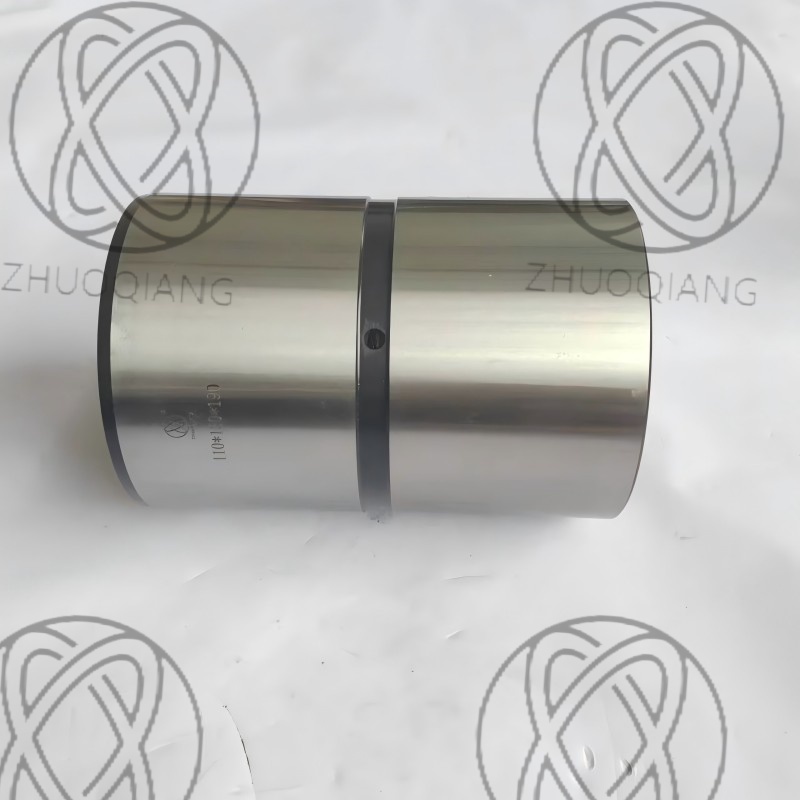
The 110×130×190 mm Excavator Bushing is a heavy-duty wear sleeve designed to protect the pivot joints of excavator booms, arms, and buckets. Manufactured from premium 42CrMo alloy steel and heat-treated by quenching, tempering, and high-frequency surface hardening, the bushing achieves a surface hardness of HRC 55–62.
This combination provides excellent wear resistance, impact strength, and dimensional stability, ensuring a longer service life of both the bushing and the mating pin. Its inner wall features a precision-machined oil-groove system, promoting smooth lubrication and reducing friction during oscillating motion — ideal for 20- to 35-ton class excavators operating under continuous heavy load.
High-Strength 42CrMo Steel — Chromium-molybdenum alloy with outstanding toughness and hardenability for large-diameter bushings.
Hardened Working Surface — Induction-hardened to HRC 55–62, providing exceptional wear life under heavy shock and pivot motion.
Optimized Lubrication Design — Internal spiral oil grooves maintain a stable oil film, lowering heat and preventing seizure.
Precision-Machined Fit — CNC machining with ±0.02 mm tolerance ensures accurate alignment with the pin and housing bore.
Corrosion Protection Options — Available with phosphate, nickel, or black oxide coatings to resist rust and dust in harsh jobsite conditions.
This size (Ø110×Ø130×190 mm) suits medium-to-large excavators (20–35 ton range), typically compatible with:
Caterpillar CAT 320 / 325 / 336 Series
Komatsu PC300 / PC350 / PC360 Series
Hitachi ZX330 / ZX350 / ZX370 Series
Volvo EC300 / EC350 Series
Doosan DX300 / Hyundai R305 Series
(Custom machining available for other brands and dimensions.)
| Position | Description | Function |
|---|---|---|
| Boom Foot Joint | Between upper frame and boom base | Endures the highest static and impact loads |
| Boom-Arm Connection | Pivot between boom and arm | Works under alternating, high-shock load cycles |
| Arm-Bucket Linkage | Joint between arm and bucket links | Transfers digging force; requires high wear resistance |
| Cylinder Mounts | At oil-cylinder base and rod ends | Ensures smooth oscillation and stable pin movement |
| Parameter | Specification |
|---|---|
| Product Name | High-Strength & Impact-Resistant Excavator Bushing |
| Size | Ø110 × Ø130 × 190 mm |
| Material | 42CrMo Alloy Steel |
| Surface Hardness | HRC 55 – 62 |
| Heat Treatment | Quenching + Tempering + Induction Hardening |
| Tolerance | ± 0.02 mm |
| Surface Finish | Precision Grinding / Optional Coating |
| Application | Excavator boom, arm, and bucket joints |
| Weight Class Compatibility | 20 – 35 ton Excavators |
| Packaging | Anti-rust film + wooden case or pallet |
1. How do I install an excavator bushing?
The bushing should be press-fitted into the housing bore with a light interference fit (typically 0.05–0.1 mm). Make sure the oil holes and grooves align correctly. Use a hydraulic press or heating/cooling method to avoid damage during installation.
2. What material is used for this bushing?
This model is made from 42CrMo alloy steel, a chromium-molybdenum grade known for high strength, impact resistance, and excellent hardenability. It is heat-treated to achieve HRC 55–62 hardness, ideal for heavy-duty pivot joints.
3. Which excavator models does this bushing fit?
The 110×130×190 mm size is compatible with 20–35 ton excavators, including CAT 320/325/336, Komatsu PC300/PC360, Hitachi ZX330/ZX350, Volvo EC300, and Doosan DX300. Custom sizes can be produced for other OEM specifications.
4. How often should excavator bushings be lubricated or replaced?
Lubricate regularly according to machine working hours—usually every 8–10 operating hours in dusty or high-load environments. Replace the bushing when clearance exceeds 0.8 mm or visible wear appears on the inner surface.
5. Can you supply OEM or customized excavator bushings?
Yes. We provide OEM/ODM production, supporting custom dimensions, materials (45#, 40Cr, 42CrMo), and surface treatments such as nickel plating or phosphating. Engineering drawings or samples are welcome for accurate manufacturing.