+86-17692703999
+86-17692703999 No. 6, West Side Auxiliary Road,
Sunshine Street, Linxi County, Xingtai
City, Hebei Province
Sunshine Street, Linxi County, Xingtai
City, Hebei Province

Views: 0 Author: Site Editor Publish Time: 2026-09-18 Origin: Site

Unplanned loader downtime often traces back to premature linkage failure. This harsh reality makes bushing material selection a critical financial decision, not just a simple maintenance task. Heavy equipment operators know this struggle intimately. Modern wheel loaders endure extreme friction, massive impact loads, and highly abrasive environments every single day. Dust, wet mud, and continuous vibration tear apart weak mechanical components rapidly. If you choose the wrong metal alloy, you risk destroying expensive loader arms and halting job site production entirely. Upgrading or selecting the correct material based on specific operational environments changes everything for a maintenance program. It maximizes daily grease retention and creates a reliable fluid barrier against damaging grit. It actively protects expensive pins from catastrophic scoring and galling. Ultimately, making the right material choice significantly extends baseline maintenance intervals. You save money, keep heavy machines running efficiently, and eliminate frustrating mid-shift mechanical breakdowns.
Using mismatched or low-grade materials inevitably causes accelerated mechanical wear. Operators often feel this specific wear as excessive "slop" in the main bucket linkage. Poor bucket control reduces digging precision and dramatically slows down daily loading cycles. Over time, this excessive lateral movement leads to catastrophic bore damage. When a sleeve degrades entirely, the hardened pin grinds directly against the softer loader arm housing. This metal-on-metal friction creates irreversible structural damage very quickly.
Many purchasing managers focus strictly on the initial unit price tag. Cheap components look highly attractive at first glance during budget reviews. However, you must carefully compare this initial saving against massive compounding maintenance costs. Frequent part replacements eat directly into your annual operating budget. Severe linkage failures require line-boring repairs. Line-boring involves setting up a portable machining rig directly on your equipment to re-cut the damaged hole. This process requires specialized contractors and forces extensive machine downtime. Lost operational hours quickly destroy project profitability and delay client deliverables.
A successful material upgrade delivers clear, measurable performance results. You achieve highly predictable wear rates across the entire machine fleet. The linkage joint maintains adequate grease retention between standard 250-hour service intervals. Most importantly, installing a premium loader bushing guarantees zero damage to the actual loader arm bores. This proactive approach successfully shifts equipment maintenance from reactive panic to scheduled predictability.
Mechanical engineers evaluate heavy machinery materials based on yield strength, natural lubricity, and environmental resistance. We see two primary material categories completely dominate the heavy earthmoving industry.
These industrial steels are best suited for extreme high-impact applications. You will find them working relentlessly in rock quarries, demolition sites, and heavy excavation projects. They deliver an extremely high ultimate load capacity. A 4340 steel alloy, for example, contains nickel which adds exceptional toughness against shock. However, these metals require strict, highly disciplined lubrication schedules. Without proper daily greasing, steel-on-steel friction causes immediate thermal seizing.
The implementation reality involves incredibly precise heat treatment processes. Manufacturers must induction-harden the raw steel to a very specific radial depth. This advanced thermal process ensures a rock-hard outer wear surface. Meanwhile, the inner core remains ductile enough to absorb violent digging shock without shattering into pieces.
Bronze materials excel heavily in high-friction, moderate-impact environments. They perform beautifully in logging or agricultural settings where regular greasing proves practically difficult. Bronze provides excellent embedded surface lubricity. It naturally resists cold-welding or galling when rubbed vigorously against hardened steel pins.
The implementation reality differs drastically from steel alloys. Bronze will permanently deform under extreme shock loads much faster than hardened alloys. If you use it for heavy granite rock handling, it may flatten and fail prematurely. Yet, it protects expensive pins exceptionally well under consistent rotational friction.
Rigorous industry standards dictate a golden mechanical rule for heavy equipment repair. The sleeve must always remain slightly softer than the mating pin. This intentional hardness differential dictates completely predictable wear patterns inside the joint. The sleeve purposefully acts as the sacrificial component in the system. Replacing a worn cylindrical sleeve costs significantly less labor than buying a brand-new hardened pivot pin.
Bushing Material Performance Chart
| Material Type | Best Use Case | Impact Resistance | Lubrication Needs | Typical Failure Mode |
|---|---|---|---|---|
| 4140 Steel | General heavy excavation | High | Strictly required | Galling, scoring |
| 4340 Alloy Steel | Extreme mining, rock quarries | Very High | Strictly required | Shattering (if too brittle) |
| Aluminum Bronze | Continuous rotation, low shock | Moderate | Low to Moderate | Deformation, physical smearing |
Different commercial jobsites punish machinery in entirely different ways. You must match your component engineering directly to the surrounding physical environment. A blanket approach to spare parts always leads to premature breakdowns.
Operating in abrasive conditions requires extremely tight dimensional tolerances. Aggressive sealing is absolutely vital to keep foreign particulate matter out. Abrasive silica sand acts exactly like liquid sandpaper inside a closed linkage joint. You must focus primarily on maximizing surface hardness to fight this abrasion. Furthermore, utilize specific internal groove designs to flush contaminants outward efficiently. A deep figure-eight grease groove effectively pushes dirty, contaminated grease out of the joint during daily maintenance purges.
Deep mining and blasted rock handling subject equipment to massive, sudden shockwaves. These harsh environments require high tensile strength core materials above all else. Standard mild steel will instantly crush under the dynamic weight of a loaded rock bucket. Induction-hardened alloys absorb these intense physical forces effectively while maintaining their internal geometry.
Engineering precise loader bushing specifications fundamentally determines how long a joint survives. Too much operational clearance causes a severe "hammering" effect. Every single time the bucket changes direction, the loose pin slams violently against the inner metal wall. This repetitive impact destroys both components rapidly. Conversely, avoiding thermal expansion seizing requires leaving just enough micro-clearance. If the mechanical fit is excessively tight, normal operational heat causes the metals to expand and lock solidly together.
Standard replacement parts do not always solve complex maintenance problems. As heavy machines age over thousands of hours, their structural geometry inevitably changes due to stress.
Factory standard sizes fail completely when loader arm bores are already worn out. Heavy commercial usage often leaves these mounting bores stretched into an egg shape. Dropping a perfectly round, standard OEM part into an egg-shaped bore guarantees immediate operational failure. The new part will rattle, spin uncontrollably, and destroy the remaining fragile bore housing.
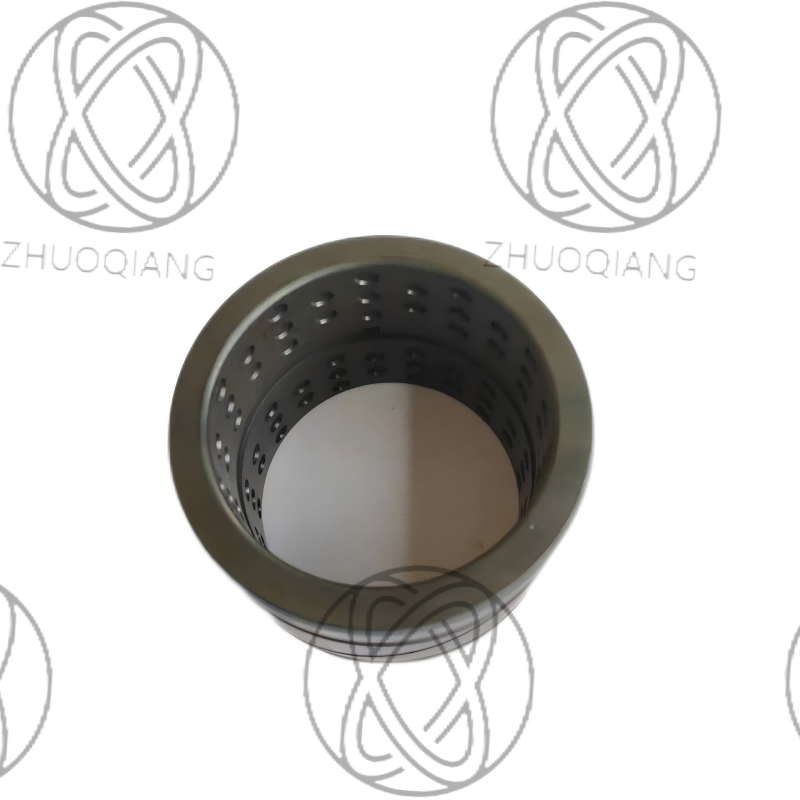
Instead of tearing the machine apart for lengthy repairs, you can adapt the replacement parts directly. Using a customized high quality steel bushing for specific, aging equipment solves this problem brilliantly. Custom CNC manufacturers can machine slightly oversized outer diameters upon request. This oversized interference fit eliminates the immediate need for expensive, time-consuming line-boring procedures. You press the custom sleeve firmly into the worn bore, securing it tightly and returning the machine to service quickly.
Industrial customization goes far beyond just altering physical dimensions. You can modify vital grease delivery paths based on your specific fleet's maintenance realities. If your operators routinely struggle to grease certain hidden joints, custom flanged designs can creatively relocate grease fittings. Adding specialized, multi-port grease holes ensures essential lubrication reaches the most critical high-friction zones evenly.
Finding a reliable manufacturing partner is absolutely crucial for long-term fleet longevity. The global market is currently flooded with cheap, unreliable aftermarket parts that look identical to premium components.
Loader bushings represent a highly critical system-level decision for your entire fleet. Choosing the right metallurgical material actively protects your linkage pins, preserves your structural bores, and vigorously defends your bottom line. Ignore this engineering decision, and you invite unnecessary downtime alongside compounding repair bills.
We strongly advise maintenance managers to physically audit their currently failed parts. Check your mechanic's scrap bin carefully today. Are the discarded metals showing clear signs of galling, impact shattering, or simple abrasive wear? Use this tangible forensic evidence to intelligently inform your next material choice.
Stop accepting premature mechanical failure as a normal, unavoidable cost of doing business. Measure your equipment bores today. Contact technical sales engineering teams for specific material recommendations and actionable quote requests.
A: Bushings should generally be slightly softer than the pins. They are engineered specifically to be the sacrificial component in the joint. Replacing a worn bushing is significantly faster and more cost-effective than replacing a heavy, highly machined loader pin.
A: Galling is typically caused by a combination of inadequate daily lubrication, improper material pairing (such as when the pin and bushing have identical hardness), or incorrect machining tolerances that simply do not allow for natural thermal expansion under heavy loads.
A: Yes, but only in applications where sudden impact loads are low and lubricity or corrosion resistance is highly prioritized. In heavy earthmoving, replacing rugged steel with softer bronze will likely result in premature deformation and rapid component failure.
A: Standard specifications often include straight, circular, or figure-eight grooves cut into the inner diameter. The figure-eight design is highly recommended for loaders as it ensures comprehensive 360-degree grease distribution under heavy, oscillating loads.