+86-17692703999
+86-17692703999 No. 6, West Side Auxiliary Road,
Sunshine Street, Linxi County, Xingtai
City, Hebei Province
Sunshine Street, Linxi County, Xingtai
City, Hebei Province

Views: 0 Author: Site Editor Publish Time: 2026-10-16 Origin: Site

Ordering the wrong linkage pin triggers a devastating domino effect on modern job sites. You face unexpected downtime, exorbitant expedited shipping fees, and accelerated wear on critical connecting components. Relying solely on visual dimensions or broad machine model names is a risky gamble. Manufacturers frequently implement mid-year design updates and serial number breaks. This means two identical-looking excavators might require completely different pin configurations. You cannot afford to guess when replacing heavy equipment parts. This guide serves as your definitive framework for identifying, verifying, and confidently sourcing replacement pins. We will show you how to use exact manufacturer nomenclature to eliminate costly procurement errors. By mastering these strict verification steps, you protect your machinery from catastrophic failure, optimize your maintenance budget, and keep your earthmoving projects running exactly on schedule.
Installing an improperly sized pin sets off a chain reaction of mechanical failures. The immediate business problem begins with severe bucket slop. This excessive looseness causes erratic digging cycles and drastically reduces grading accuracy. Over time, incorrect fitment leads to severe galling. Metal violently scrapes against metal, destroying both the pin and the surrounding housing. Ultimately, this places unnatural structural stress on the boom and stick assemblies.
Engineering standards demand exact clearances for heavy machinery. We measure these critical tolerances in thousandths of an inch. Perfect clearance ensures proper grease distribution and retention across the joint. If a pin fits too tightly, grease cannot coat the internal wear surfaces. If it fits too loosely, grease escapes immediately under pressure. Both scenarios guarantee rapid part destruction.
Buyers often fall into the dangerous "lookalike" trap. Generic replacement parts might share broad dimensional similarities with the original components. However, they frequently lack critical internal engineering features. They might miss required internal grease galleys, specific flange orientations, or adequate surface hardening. Visually identical parts routinely fail within days if they ignore these stringent engineering standards.
Finding your exact part number requires a highly methodical approach. Do not rely on memory or physical guesswork. Follow these specific steps to locate your excavator linkage pin OEM number accurately and efficiently.
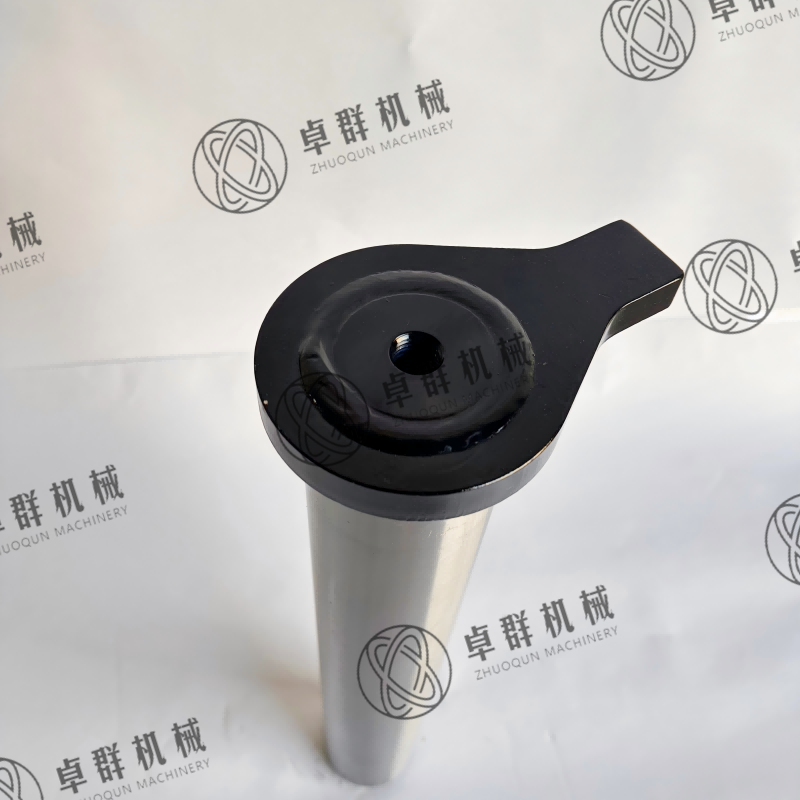
Heavy-duty applications require extreme precision and stringent material standards. Let us examine sourcing a SANY 375 linkage pin as a practical real-world example. This contextual application demonstrates high-stress evaluation criteria perfectly.
You must clearly understand manufacturer-specific formats. Knowing how to read and decode specific OEM part number structures prevents disastrous mix-ups. This knowledge ensures you select the correct linkage group for your repair. For instance, you must distinguish between bucket-to-stick pins and H-link pins. Their part number structures often look incredibly similar but indicate entirely different load capacities and internal designs.
Load-bearing requirements dictate absolute engineering compliance. Exact OEM verification becomes hyper-critical for 30-plus ton class excavators. In this massive weight class, sheer forces reach extreme levels. These forces quickly destroy sub-par aftermarket replacements. A high-tonnage machine will snap a weak pin under full breakout force, risking operator safety and job site integrity.
Many operators assume aftermarket options always fall short of factory quality. We must deconstruct this outdated quality parity assumption. Top-tier aftermarket manufacturers frequently achieve total OEM equivalency. They utilize the exact same materials, testing protocols, and heat-treating processes as the original builders.
Material and processing criteria ultimately determine part longevity. First, you must verify the specific steel grade. You need high-carbon alloy steel for heavy equipment. Look for specifications like 40Cr or 45# steel. Second, demand proper heat treatment validation. Induction hardening remains an absolute necessity. The pin surface must achieve a hardness typically ranging from HRC 52-60. This hardness provides crucial surface wear resistance against abrasive soils.
Meanwhile, the manufacturing process must maintain a ductile core within the pin. A softer, ductile core prevents the metal from snapping under heavy shock loads. Learn to spot critical red flags in sourcing. Avoid suppliers offering unusually low pricing. Watch out for counterfeit parts or low-quality sand castings. A lack of a clear warranty should immediately halt your purchase. Missing cross-reference guarantees also signal an untrustworthy vendor.
Supplier Quality Comparison Matrix| Evaluation Criteria | Genuine OEM Parts | Premium Direct Replacements | Low-Quality Generics |
|---|---|---|---|
| Material Grade | Verified High-Carbon Alloy | Verified High-Carbon Alloy (40Cr/45#) | Unknown or Mild Steel |
| Heat Treatment | Induction Hardened Core | Induction Hardened (HRC 52-60) | Basic Surface Treated Only |
| Cross-Reference | Exact Serial Match | Guaranteed OEM Match | Vague "Fits Most" Claims |
| Grease Galleys | Precision Machined | Precision Machined to Spec | Often Misaligned or Missing |
Successful heavy equipment maintenance requires a holistic repair approach. Replacing a pin without verifying or replacing the corresponding bushing remains a costly mistake. Mated parts wear together over thousands of hours. A brand new pin installed inside a worn, oval-shaped bushing suffers uneven load distribution. This poor contact patch inevitably leads to the premature failure of your fresh parts.
Strict supplier compliance forms your strongest defense against equipment failure. Before placing a purchase order, always demand specific documentation. Request metallurgical test reports for the batch. Require exact OEM number cross-reference guarantees in writing. Always check their return policies regarding unforeseen fitment issues. If a vendor refuses any of these simple requests, find another supplier immediately.
Take actionable next steps before requesting a formal quote. Gather your specific machine serial number first. Next, write down the presumed excavator linkage pin OEM number. Finally, record your precise digital caliper measurements. Presenting this complete data package to a supplier ensures you receive the exact part you need on the first try.
Precision during the procurement phase prevents catastrophic failure in the trench. You save valuable time, protect your expensive equipment, and maintain a safe working environment when you strictly follow verification protocols.
Remember the golden rule of heavy equipment maintenance. You must always verify the machine serial number against the official parts manual. You must cross-reference the exact OEM part number. Finally, you must demand absolute material transparency from the supplier. Following these three steps eliminates the costly guesswork from part replacement.
Do not leave your next major repair to chance. Gather your documentation, take precise digital measurements, and contact your parts desk today. Provide your verified OEM number for a definitive compatibility check and a highly accurate quote.
A: When numbers wear off, rely on your machine's serial number and the manufacturer parts manual. Combine this data with precise digital caliper measurements of the old part. Measuring the diameter, length, and hole placement allows suppliers to cross-reference the exact specifications and identify the correct part.
A: Yes, manufacturers frequently update part numbers to reflect improved designs or standardized sizing. You can use superseded numbers safely, provided you verify backward compatibility through official dealer portals. Always ask your supplier to confirm the new number directly replaces the old one.
A: They can be equal or even better if you source them carefully. Premium aftermarket pins offer identical reliability when they match OEM dimensional tolerances exactly. You must verify they use the correct high-carbon steel grade and meet precise induction heat treatment specifications.
A: The most common cause is misaligned internal grease galleys. If the OEM grease galley alignment does not match the housing perfectly, grease cannot flow. Additionally, ensure the corresponding bushing is completely clear of hardened debris and dirt before attempting to pump fresh grease.