+86-17692703999
+86-17692703999 No. 6, West Side Auxiliary Road,
Sunshine Street, Linxi County, Xingtai
City, Hebei Province
Sunshine Street, Linxi County, Xingtai
City, Hebei Province

Views: 0 Author: Site Editor Publish Time: 2026-11-10 Origin: Site

Did your rebuilt machine start rattling the moment it hit the dirt? Rebuilding a wheel loader requires a massive investment of time, labor, and capital. Yet, mechanics often find that newly installed components loosen shortly after the machine returns to the quarry or construction site. Why does this happen? This frustrating reality causes unexpected downtime. Worse, it introduces severe safety risks to the operators.
Post-rebuild loosening is a common but entirely preventable issue. It stems from embedment relaxation, improper torqueing procedures, extreme operational vibrations, or simply using subpar replacement materials. We will explore the metallurgical and mechanical reasons why heavy machinery components back out or shift. We will also examine practical strategies to keep your machine secure, tight, and productive long after it leaves the service bay.
Embedment and Settling: New components naturally settle into place during their first few hours of operation. This microscopic shifting leads to an inevitable loss of bolt tension, requiring immediate attention.
Vibration is the Enemy: Heavy shock loads and constant operational vibrations quickly back out fasteners if proper thread-locking compounds and strict torqueing procedures are ignored.
Quality Matters: Utilizing low-grade aftermarket parts instead of precision-engineered components leads to premature wear. This creates initial play that accelerates degradation.
Contamination Kills Tension: Paint, dirt, or grease left on mating surfaces during a rebuild eventually crushes away under operational pressure. This leaves a gap that entirely removes tension from the joint.
Re-Torqueing is Mandatory: A strict post-rebuild maintenance schedule is non-negotiable. Regular re-torqueing and consistent greasing are fundamental requirements for long-term structural integrity.
When technicians assemble heavy machinery, the metal surfaces might look perfectly flat to the naked eye. Under a microscope, however, these machined areas consist of thousands of jagged peaks and valleys known as surface asperities. When you bolt these components together and apply immense clamping force, these microscopic high points are forced into direct contact.
As the machine begins moving earth, dynamic loads and extreme pressures cause these asperities to yield, crush, and flatten out. This metallurgical phenomenon is known as embedment relaxation. It accounts for a microscopic loss in material thickness. While it seems negligible, it is more than enough to relieve the preload on a fastener. Because a tensioned bolt acts like a heavy-duty spring, any loss in joint thickness allows that spring to relax. Consequently, the clamping force plummets. The assembly rattles loose even if the bolt itself has not unthreaded.
Beyond mechanical crushing, heavy equipment endures severe thermal cycling. Hydraulic systems, heavy-duty transmissions, and diesel engine blocks generate massive amounts of heat during standard earthmoving operations. As the temperature rises, the surrounding cast iron housings and steel fasteners expand at different rates depending on their specific thermal coefficients.
When the shift ends and the machine cools down, the metals contract. This continuous cycle of expanding and contracting places immense fatigue on joints. Over the first few weeks following a comprehensive rebuild, these thermal cycles cause micro-shifting between bolted flanges. If the fasteners were not tensioned correctly to accommodate this shifting, the thermal movement gradually works the threads loose.
Relying on physical feel or an impact wrench to tighten bolts is a gamble that usually ends in mechanical failure. Every component is engineered to operate under a specific clamping force, which is achieved by applying precise torque. Under-torqued fasteners simply fail to achieve the necessary preload.
When a bucket rams into a dense stockpile, massive external shear and tensile loads attack the linkage. If the clamping force is lower than the operational load, the joint separates slightly. This micro-separation allows transverse vibration to overcome the friction holding the bolt threads in place. The fastener vibrates loose almost immediately.
Conversely, applying too much torque is equally destructive. High-strength steel bolts are designed to be stretched within their elastic region. They want to return to their original length to generate clamping force. However, if a technician over-torques a fastener, the steel is pushed past its elastic limit and enters the plastic region.
Once plastic deformation occurs, the bolt permanently stretches. It loses its spring-like properties and can no longer maintain tension. An over-torqued bolt will either snap under the first heavy shock load or gradually yield further during operation, leaving the joint dangerously loose.
Due to the embedment relaxation and thermal cycling discussed earlier, initial torque values inevitably drop during the first few hours of machine operation. Skipping the post-rebuild re-torque interval is a guaranteed path to rattling parts. A strict schedule restores lost tension before active loosening leads to catastrophic failure. Checking critical structural bolts at 10, 50, and 100 hours is standard engineering practice.
Wheel loaders operate in brutal industrial environments. The daily cycle involves ramming heavy steel buckets into compacted stockpiles, lifting multi-ton loads of aggregate, and dropping materials into haul trucks. Every impact generates massive kinetic energy.
These violent shockwaves travel directly through the bucket, into the lift arms, and throughout the machine's chassis. They specifically target linkage pins and bushings. If the joints are not perfectly tight, the shock loads cause the components to slam against each other. This hammering effect exponentially increases the rate at which bolts back out and bores become oval-shaped.
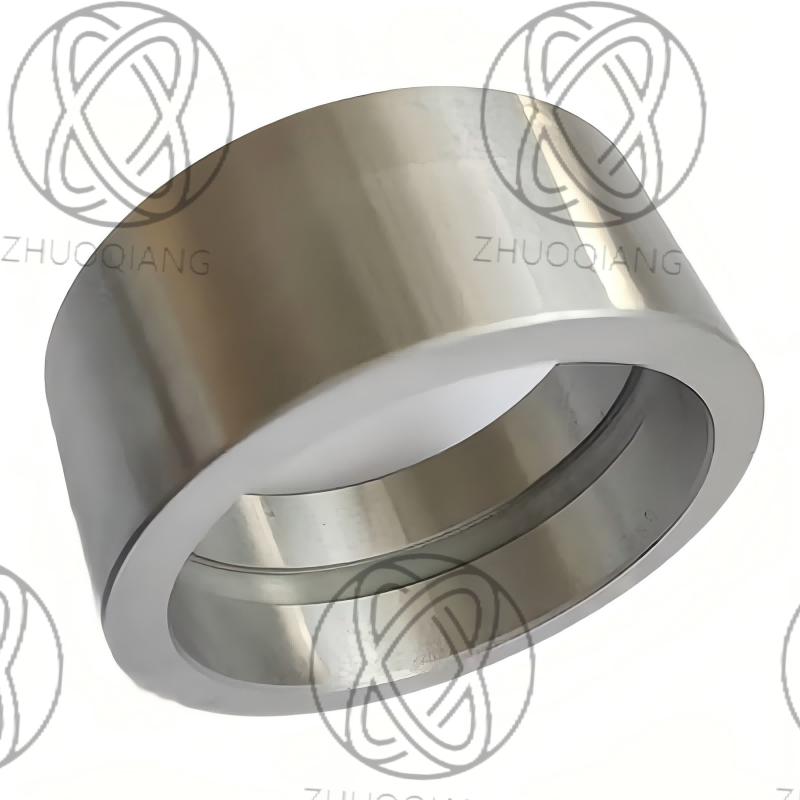
To mitigate this destruction, manufacturers rely on specialized sacrificial wear items. High-quality bushings are engineered with specific metallurgical properties that allow them to absorb and distribute kinetic energy. This prevents shockwaves from transferring directly into rigid structural bolts. Upgrading to a premium wheel loader part designed for heavy-duty 420-series and 430-series backhoe configurations ensures the linkage can withstand severe impacts without compromising the surrounding hardware. Inferior bushings lack this resilience, allowing vibrations to bypass the joint and rattle the entire assembly apart.
The foundation of a tight, reliable rebuild lies in dimensional accuracy. Precision-engineered components are machined to exacting tolerances, often measured in ten-thousandths of an inch. This precision ensures a perfect interference fit.
In contrast, unverified, low-cost loader parts frequently suffer from poor manufacturing tolerances. If a pin is slightly undersized or a bushing bore is oversized, the joint will never fit snugly. This initial dimensional play mimics the symptoms of a loose joint from day one. It turns a minor rattle into a severely dangerous linkage as kinetic energy accelerates wear.
Furthermore, metallurgical hardness dictates longevity and stability. Heavy machinery linkages require materials featuring a tough, ductile core to absorb bending forces, combined with an extremely hard outer case to resist friction. Processes like induction hardening are used to achieve these specific Rockwell Hardness ratings.
Low-quality replacements often utilize inferior steel alloys or skip critical heat-treatment processes. When these soft metals are subjected to brutal hydraulic force, they deform plastically. As the soft metal wears away, empty space is created within the joint, destroying bolt tension and necessitating premature repairs.
Component Feature | Premium Engineered Parts | Low-Grade Alternatives | Impact on Rebuild Integrity |
|---|---|---|---|
Dimensional Tolerance | Strictly controlled to 0.01mm | Inconsistent, often oversized or undersized | Prevents initial play and vibration loosening |
Heat Treatment | Induction hardened case with a ductile core | Surface-only or skipped heat treatment entirely | Resists plastic deformation under heavy loads |
Lubrication Grooves | Precision-machined for even grease distribution | Shallow, poorly machined, or missing grooves | Prevents metal-on-metal friction and rotational binding |
A fresh coat of industrial paint makes a rebuilt machine look pristine. However, painting components before bolting them together is a highly destructive mistake. Paint acts as a soft polymer layer trapped between hard steel flanges.
When high-tensile bolts are torqued down, they compress this layer of paint. Over the first few days of heavy operation, the immense compressive stress causes the paint to crack, pulverize, and crush away. Losing just a fraction of a millimeter of paint thickness instantly relieves the bolt's preload. This results in a joint that has completely lost its clamping force.
Contamination extends beyond paint. Dirt, old grease, rust, and grit left on mating surfaces or inside threaded holes severely compromise the integrity of a rebuild. Debris trapped between two flanges acts like tiny ball bearings, preventing the metal surfaces from achieving maximum friction.
Similarly, debris inside threaded holes alters the friction coefficient of the fastener. A torque wrench might click to indicate the target tension, but the energy was actually wasted overcoming thread friction rather than stretching the bolt. Thoroughly wire-brushing and solvent-cleaning all mating surfaces is an absolute necessity before reassembly.
Even perfectly machined and correctly torqued assemblies fail without proper boundary lubrication. A microscopic film of extreme-pressure grease must separate the steel pin from the bushing. When lubrication is neglected post-rebuild, the joint enters a state of dry, metal-on-metal friction.
This generates intense thermal energy, rapidly breaking down the surface hardening. Adhesive wear tears microscopic chunks of metal away, increasing bore clearances. The friction-induced material loss causes the assembly to become dangerously loose in a fraction of its expected lifespan.
To protect the investment of a rebuild, a rigorous post-maintenance lubrication schedule must be enforced. Newly installed linkage kits require frequent greasing during their break-in period to flush out initial wear particles. Implementing a rigid purge greasing protocol ensures a consistent barrier of extreme-pressure grease.
The success of this maintenance relies heavily on the quality of the linkage components installed. Utilizing a precision-engineered lonking part designed for medium wheel loaders like the 953 series ensures optimal grease distribution. Deep, well-machined grooves distribute lubrication evenly across load-bearing zones, preventing friction-induced wear and keeping the equipment secure.
Recent industry analyses regarding heavy machinery rebuilds highlight a significant shift in how managers approach equipment longevity. Rather than relying solely on manual re-torque intervals, modern fleet managers are increasingly adopting ultrasonic tension measurement and IoT-enabled sensors to monitor joint integrity in real-time. Market reports indicate that the adoption of advanced thread-locking compounds and vibration-resistant structural hardware has surged significantly in the past three years. This trend reflects a broader industry consensus: preventing component loosening post-rebuild is no longer just about tightening bolts harder. It requires a holistic approach combining advanced metallurgy, precision digital torqueing, and continuous operational monitoring to drastically reduce unplanned downtime.
Rebuilding a wheel loader is demanding work. Dealing with loose linkages shortly after the job is done is a frustrating and costly setback. By understanding the mechanical realities of embedment relaxation, the dangers of improper torque, and the destructive nature of operational vibrations, you can take proactive steps to keep your machine tight and secure.
Above all, the success of your rebuild hinges on the quality of the components you use. Choosing high-grade, precision-engineered materials, keeping mating surfaces flawlessly clean, and adhering to strict re-torqueing schedules is the best way to ensure your loader performs flawlessly. Are you ready to upgrade the reliability of your next rebuild? Explore our comprehensive catalog at MA Parts International to find the exact, durable parts your heavy machinery demands.
It is highly recommended to inspect and re-torque all critical structural bolts after the first 10, 50, and 100 hours of operation. During the initial hours of use, microscopic surface imperfections on new metal components flatten out under extreme pressure. Re-torqueing at these specific intervals accounts for this natural settling process and restores the necessary tension to prevent severe loosening.
Persistent loosening is typically caused by bore distortion, severe friction-binding, or metallurgical failure. If the bore housing the pin has worn into an oval shape from previous damage, no amount of tightening will secure the joint. Alternatively, a lack of consistent lubrication causes the pin to bind against the bushing, transferring rotational force directly to the retaining bolts and backing them out.
Not necessarily, provided the procurement process strictly filters for reputable, heavy-duty manufacturers. High-tier aftermarket components are frequently engineered to meet or exceed standard specifications. However, purchasing low-cost, unbranded items from unverified sources drastically increases the risk of loosening due to poor dimensional tolerances and inadequate quality control.
Securing any critical component requires strict adherence to mechanical best practices. First, ensure all mating surfaces, threads, and flanges are completely stripped of paint, dirt, and residual grease. Second, utilize a recently calibrated torque wrench to apply the exact torque specifications outlined by the manufacturer. Finally, apply the appropriate industrial thread-locking compound to the fasteners prior to installation to provide a chemical barrier against operational vibrations.
Yes. High-tensile bolts undergo metal fatigue and plastic deformation over their operational lifespan. Reusing hardware that has already been stretched past its elastic limit means the bolt can no longer generate the required clamping force. This leads to rapid loosening under heavy shock loads. Always replace critical structural fasteners during a major rebuild.
Heavy machinery experiences extreme thermal cycling. As metal components heat up during operation and cool down when turned off, they expand and contract at different rates. This continuous thermal movement can cause micro-shifting in bolted joints. This shifting gradually relieves fastener preload and causes parts to loosen if not properly re-torqued.