+86-17692703999
+86-17692703999 No. 6, West Side Auxiliary Road,
Sunshine Street, Linxi County, Xingtai
City, Hebei Province
Sunshine Street, Linxi County, Xingtai
City, Hebei Province

Views: 0 Author: Site Editor Publish Time: 2026-09-06 Origin: Site

A loader is only as stable as its pivot points. When a pivot link wears down, it severely compromises breakout force, cycle times, and operator safety. Performance loss rarely happens suddenly. It is usually the slow culmination of abrasive friction, unseen metallurgical fatigue, or improper daily maintenance. For fleet managers and heavy machinery mechanics, quick fixes are never enough. Your main priority is diagnosing the exact failure mode. Finding the root cause prevents recurring downtime and expensive secondary damage. This guide analyzes the hidden mechanics of pivot wear. We outline the critical replacement specifications you must demand from manufacturers. Finally, we provide a proven framework for selecting commercial-grade replacements. You will learn how to inspect your equipment, evaluate metallurgical grades, and secure hardware built to withstand extreme operational stresses.
Friction and Fatigue: The primary drivers of loader pin shaft failure are abrasive ingress (gall/scoring) and stress concentration from shock loads.
Material Matters: Standard carbon steel (like 1045) is insufficient for high-impact applications; chromoly steel (like 4140) with precise heat treatment is the baseline for heavy-duty longevity.
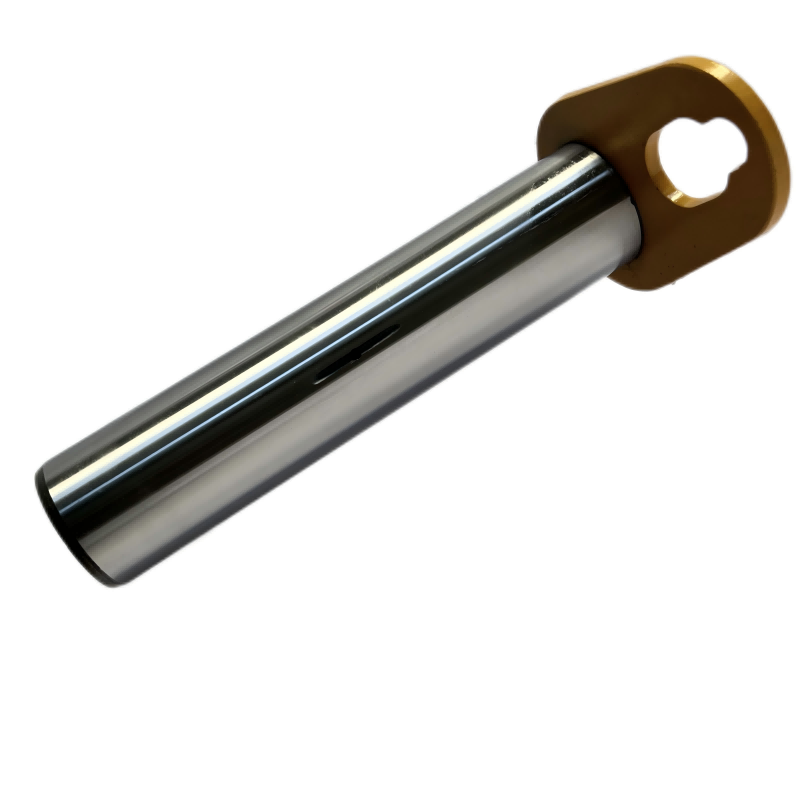
Sizing & Tolerances: Specifying exact tolerances (e.g., high quality bucket pin shafts 80) prevents lug wear and catastrophic failures like bucket detachment.
Supplier Vetting: Evaluating a loader pin shaft supplier requires looking beyond price to verify metallurgical certifications, hardening depths, and QA processes.
Pivot connections endure immense physical forces daily. When a loader pin shaft begins to fail, the entire machine suffers. Understanding exactly how and why these components break down is the first step toward preventing future failures.
Abrasive Wear and Galling: Grease acts as a vital protective barrier. When lubrication schedules slip, silica, dirt, and rock dust infiltrate the pivot cavity. This abrasive debris mixes with residual grease. It creates a highly destructive grinding paste. Over hundreds of operating hours, this paste literally machines down the pin diameter. You will eventually see deep scoring and material transfer. Mechanics refer to this material tearing as galling.
Stress Concentration and Metal Fatigue: Loaders frequently collide with solid, immovable obstacles. Digging aggressively into heavily compacted soil sends violent shockwaves straight through the boom. These repeated shock loads create microscopic fractures along the pin surface. Over time, these micro-fractures grow. They follow the path of least resistance deeper into the metal. This fatigue ultimately leads to a completely snapped pin.
Lug Wall Expansion (Pivot Wear): Component wear creates a compounding mechanical disaster. A worn pin introduces tiny amounts of clearance. This extra space allows the pin to act like a slide hammer against the mounting lugs. Every bucket curl slams the pin violently into the lug walls. Soon, the perfectly round bores stretch into oval shapes. Standard pin replacements become completely useless at this stage because the mounting hole itself is ruined.
Extreme Consequences: Neglecting these early warning signs invites catastrophe. Catastrophic shear happens when a weakened, fatigued pin completely snaps under a heavy load. This failure mode leads to sudden bucket falling incidents or total boom collapse. Operator safety is instantly compromised, and the surrounding worksite is put at extreme risk.
Accurate diagnostics prevent wasted repair hours. You must systematically isolate the exact source of the pivot play before ordering parts.
Visual and Operational Diagnostics:
Excessive Lateral or Vertical Play: Raise the loader arms slightly off the ground. Place a sturdy pry bar under the pivot joint. Apply upward force and watch the connection closely. If you see independent movement between the pin and the lug before the arm actually moves, you have excessive play.
Uneven Hydraulic Response: Pay attention to the machine's behavior under load. If you feel "jerking" or stuttering during lift cycles, the pivot geometry is likely compromised. Binding pins force the hydraulic cylinders to work harder, causing erratic movement.
Visible Surface Damage: Extract the shaft and clean it thoroughly. Look for obvious scoring lines. Check for localized bluing. Bluing indicates intense friction heat burned away the grease. Finally, feel for step-wear. Step-wear happens when the pin develops distinct ridges where it rubbed against the bushing.
The "Line-Boring" Threshold:
You must determine if a simple part swap will fix the issue. Use an inside micrometer to measure the bore of the frame lugs. Measure horizontally and vertically. If the difference (ovality) exceeds the manufacturer's allowable tolerance (often just 0.5mm), a new pin will not sit tightly. At this threshold, you cannot simply install a new pin and bushing. The frame lugs require professional line-boring. A machinist must weld the inside of the worn lug to add material. They then bore it perfectly round to restore the factory dimension.
You cannot compromise on engineering specifications. The physical demands placed on a loader require precise metallurgical choices and exact machining standards.
Metallurgical Baselines:
Steel choice dictates the survival of the pivot joint. Standard 1045 carbon steel offers decent basic strength. However, it lacks the toughness required for heavy impact forces. Heavy-duty applications demand specialized alloy steels. Alloys like 4140 or 4340 chromoly steel contain specific amounts of chromium and molybdenum. These chemical additions dramatically increase both yield strength and fatigue resistance. They simply outlast standard carbon steel in every earthmoving scenario.
Common Heavy Equipment Steel Grades Comparison
Grade | Alloy Type | Impact Resistance | Best Use Case |
|---|---|---|---|
1045 | Medium Carbon | Low to Moderate | Light duty, low-stress static pins |
4140 | Chromium-Molybdenum | High | Standard heavy-duty loader pivots |
4340 | Nickel-Chromium-Moly | Extreme | High-impact mining or rock buckets |
Heat Treatment & Hardness (HRC):
Raw steel is not enough. The manufacturing process must include induction hardening. The pin surface must be hard enough to resist abrasive wear. We typically look for a surface hardness of 50-60 on the Rockwell C scale (HRC). However, the hardening process must only penetrate a few millimeters (case hardening). The internal core must remain relatively soft and ductile. A ductile core absorbs violent shock loads without shattering.
Dimensional Tolerances:
Exact fitment is completely non-negotiable. Industrial standards demand strict adherence to specified dimensions. For example, when you source high quality bucket pin shafts 80, you ensure an exact 80mm diameter fit. Even micro-millimeter deviations create immediate play upon installation. Loose components slam into the bushings during operation. This causes premature, rapid wear across the entire assembly.
Implementation Reality:
Beware of unverified aftermarket parts. Many cheap manufacturers "through-harden" their pins. Through-hardening makes the entire pin reach 60 HRC. This creates an incredibly brittle component. An over-hardened pin is basically a glass rod. It will easily snap under heavy breakout loads, leaving your bucket stranded in the dirt.
When you confirm a part needs replacement, you face three distinct purchasing avenues. Each option carries specific mechanical and operational trade-offs.
OEM Replacements:
Original Equipment Manufacturer parts offer a guaranteed fit. You know the metallurgy aligns perfectly with factory engineering. They are the best choice for machines still under warranty. However, they frequently carry massive price markups. Dealerships may also struggle with long lead times. If a critical machine goes down, you often cannot afford to wait three weeks for a factory shipment.
High-Tier Aftermarket:
Quality aftermarket brands provide a highly cost-effective alternative. These parts are usually sitting on a shelf, immediately available for dispatch. However, your success depends entirely on strict procurement discipline. You must aggressively enforce loader pin shaft specifications before buying. Never accept generic "hardened steel" claims. Demand exact alloy grades and verify the case hardening depth.
Expander Pin Systems:
This is the technical upgrade for older machines. Expander systems use a unique mechanical design. They feature tapered expansion sleeves on both ends. As you torque the fastener, the sleeves expand radially into the worn frame lugs. This expanding action permanently locks the system tight. It entirely eliminates pivot play without the need for expensive line-boring. The primary trade-off is cost. You pay a higher upfront part cost. However, you significantly lower your heavy installation labor and machine downtime.
Sourcing reliable heavy machinery parts requires a cynical eye. You must evaluate the manufacturing source thoroughly before installing their steel into your fleet.
Material Certification:
Never rely on a basic product description. Demand transparent Mill Test Reports (MTRs). An MTR acts as the birth certificate for the steel. It proves the exact grade and lists the precise chemical composition. If a vendor cannot produce an MTR, walk away immediately.
Quality Control & Testing:
Look for manufacturers that take testing seriously. Premium facilities utilize ultrasonic testing to scan the steel. This identifies hidden internal flaws or air pockets before machining begins. They also use precise Rockwell hardness testing equipment. They must verify the induction hardening process hit the correct 50-60 HRC target every single time.
Inventory & Scalability:
Assess their operational capacity. Can they consistently provide standardized sizes ranging from 40mm to well over 100mm? Furthermore, evaluate their turnaround time for custom machining. Older or heavily modified loaders often require custom lengths or modified grease channels.
Risk Mitigation:
A credible loader pin shaft supplier stands firmly behind their engineering data. They will guarantee dimensional tolerances in writing. They should also offer clear, unambiguous warranty terms protecting you against premature shearing or unusual wear patterns.
Performance loss at the pivot point is a highly correctable issue. However, you cannot rely on quick, cheap fixes. A lasting repair requires you to prioritize correct metallurgy, precise machining tolerances, and verified induction hardening over the lowest initial price tag. Understanding the mechanics of abrasive wear and stress fatigue empowers you to make smarter procurement decisions.
Your next steps are clear. First, extract the damaged components and thoroughly clean the area. Second, measure the frame bore carefully with an inside micrometer to check for ovality. Finally, consult directly with a certified supplier using the strict specifications outlined in this guide. Securing the right commercial-grade hardware ensures your machine returns to maximum breakout force and remains safely operational for thousands of hours.
A: Always base your baseline schedule on OEM guidelines. This typically ranges from every 10 to 50 operating hours. However, you must adjust this frequency for extreme environments. If you operate in heavy dust, deep mud, or abrasive sand, you should grease the pivot points daily. Fresh grease pushes out the abrasive contaminants before they cause damage.
A: Early failures usually point to mismatched hardness or poor installation. If the replacement was through-hardened, it was likely too brittle to absorb shock. Alternatively, installing a perfectly straight pin into an already ovalized, worn lug causes severe uneven stress. Extreme overloading beyond machine capacity also causes immediate shear.
A: We highly discourage this practice. Untreated mild steel rod entirely lacks the necessary shear strength and surface hardness. It will deform almost instantly under hydraulic load. This risks an immediate structural failure, creating severe safety hazards for the operator and ground crew.