+86-17692703999
+86-17692703999 No. 6, West Side Auxiliary Road,
Sunshine Street, Linxi County, Xingtai
City, Hebei Province
Sunshine Street, Linxi County, Xingtai
City, Hebei Province

Views: 0 Author: Site Editor Publish Time: 2026-09-22 Origin: Site

Standard Off-The-Shelf (OTS) components resolve about 80% of routine maintenance needs across heavy equipment fleets. You often rely on these readily available parts for quick fixes. However, standard components frequently fail when pushed into extreme operational environments. These specialized failures account for the majority of severe downtime and costly operational bottlenecks on your job site.
Relying solely on mass-produced elements forces your machinery to operate under crippling limitations. You need a strategic way to engineer out these recurring failure points. Customization is never just a last resort for obsolete machines. It acts as a deliberate strategy to adapt your fleet to non-standard project environments effectively.
In this guide, we define exactly when custom manufacturing justifies its engineering investment and longer lead times. You will learn how to identify critical wear patterns and document precise requirements. Ultimately, we help you improve overall financial efficiency and keep your heavy machinery running smoothly.
Custom parts are financially viable when the cost of recurring downtime exceeds the premium of specialized engineering.
High-abrasion tasks and legacy fleet maintenance are the primary triggers for custom manufacturing.
Documenting precise construction machinery parts specifications is the critical first step before engaging a manufacturer.
Vetting a partner requires evaluating their engineering capabilities, metallurgical expertise, and quality assurance protocols, not just their pricing.
Standard components are designed for average conditions. Manufacturers engineer them to meet general industry benchmarks. Operating outside these averages causes premature failure. When your excavators or loaders face extreme loads, factory parts degrade quickly. This forces your maintenance teams into constant repair cycles.
You must calculate the true cost of standard part failure. Do not just look at the initial purchase price. Calculate your Cost of Downtime (CoD). This metric includes labor wages for replacement work. It includes idle machine hours. It also factors in project delays and potential contractual penalties. Once you compare this combined cost against the upfront premium of a custom-engineered part, the financial logic becomes clear. Often, investing in robust construction machinery parts yields a better return over the equipment's lifespan.
Industry professionals often use the Rule of Three. Monitor your replacement intervals closely. If a specific component fails three times faster than its expected lifecycle under current site conditions, flag it immediately. It becomes a prime candidate for material or structural customization. Redesigning it saves money in the long run.
You must maintain assumption transparency. Custom parts will invariably have longer initial lead times. Engineering, drafting, and tooling take time. You realize the return on investment in the extended operational lifecycle. You benefit from significantly reduced maintenance intervals. You do not choose customization for immediate acquisition speed, but for lasting reliability.
Certain field scenarios push standard machinery beyond structural limits. When you encounter these environments, off-the-shelf solutions simply stop working. You must adapt the equipment to the environment, rather than hoping the environment forgives the equipment.
Extreme environmental wear destroys standard steel grades rapidly. High-abrasion sites like granite quarries chew through factory buckets. Deep-freeze excavation tasks make standard alloys brittle. In these harsh realities, you need specialized metallurgy. Engineers can formulate custom steel blends resistant to localized abrasion or sub-zero impacts.
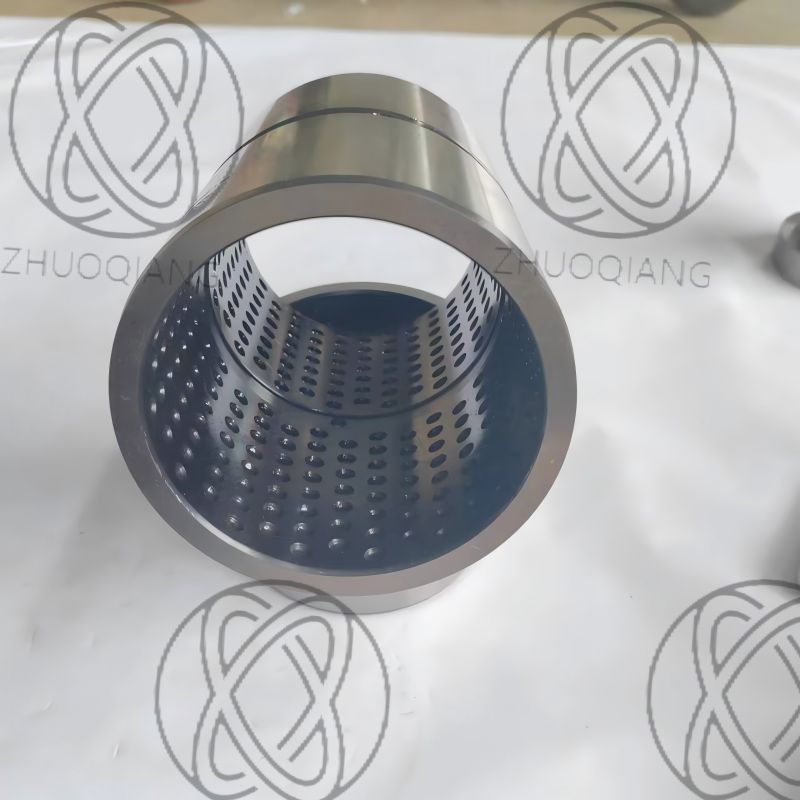
Targeted reinforcement needs also drive custom orders. You often need to upgrade specific high-stress attachment points. For instance, standard factory sleeves wear out quickly under continuous heavy load. By upgrading to a customized construction machinery parts bucket sleeve, you gain heavy-duty hardfacing. Engineers design these with specific alloy blends. They withstand localized abrasive wear far better than any standard equivalent.
Legacy equipment viability remains a massive challenge for fleet managers. Heavy machinery often outlasts its original manufacturer's support window. Keeping discontinued but structurally sound machines operational is critical. When original OEMs no longer produce replacement components, custom manufacturing steps in. Reverse engineering breathes new life into older fleets.
Finally, specialized project attachments require tailored geometries. Standard attachments handle standard materials. When your project involves non-standard materials, you need modifications. You might need to achieve specific operational angles unsupported by off-the-shelf designs. Custom shops can modify existing geometries to perfectly match your project demands.
Procurement teams constantly juggle three main sourcing options. Choosing the right path requires understanding the strengths and limitations of each category. You must align the part's function with the machine's operational demands.
Original Equipment Manufacturer (OEM) parts offer high reliability. They guarantee a predictable fit. They also carry a premium price tag. OEM components are best suited for machines currently under warranty. You should use them primarily for standard operating conditions where factory specs suffice.
Aftermarket options provide a highly cost-effective alternative. They are readily available across multiple distributors. However, they exhibit varying quality levels depending on the brand. Aftermarket sourcing works best for routine consumables. Use them for filters, standard hoses, and cab accessories where a generic fit never compromises machine safety.
Custom engineered construction machinery parts deliver application-specific metallurgy and geometry. You commission these when standard options repeatedly fail. They bridge the gap between factory limitations and field realities.
The final verdict requires practical judgment. Choose custom solutions when OEM parts fail prematurely due to harsh site conditions. You should also choose custom when aftermarket equivalents cannot meet the strict tolerance levels required for your specific load capacities.
Component Sourcing Comparison Chart
Sourcing Option | Primary Benefit | Major Limitation | Best Use Case |
|---|---|---|---|
OEM | Guaranteed factory fit | Premium pricing | Machines under warranty |
Aftermarket | Immediate availability | Inconsistent quality | Standard consumables |
Custom Built | Engineered for extreme stress | Longer initial lead time | Recurring failure points |
Transitioning from a mechanical problem to a manufacturing blueprint requires precise data. You must gather the right information to ensure success. The new custom part must solve the underlying issue. It must do so without introducing new mechanical conflicts into the machine system.
You need to establish core documentation requirements before contacting a shop. Thorough documentation speeds up the engineering process. It also eliminates costly manufacturing errors down the line. Detailed construction machinery parts specifications protect your investment.
Focus on these three critical documentation areas:
Dimensional Tolerances: Gather precise CAD drawings if available. Alternatively, use reverse-engineered measurements or 3D scans of the existing component. You must also measure the mating parts to ensure perfect fitment.
Metallurgical Requirements: Specify the required hardness using Brinell or Rockwell scales. Detail the tensile strength and impact resistance needed. Base these requirements on a thorough failure analysis of the old part.
Load and Stress Profiles: Document the dynamic loads the machine handles daily. Note extreme thermal conditions. List the specific abrasive elements (like silica dust or corrosive mud) the part faces in the field.
Risk mitigation relies on accurate data transfer. Incomplete specifications always lead to poor fitment. Vague descriptions cause metallurgical failures. Always provide the manufacturer with the physically failed component if possible. Sending the broken piece allows their engineers to conduct a proper failure analysis in their own lab.
Finding a reliable partner demands strict evaluation criteria. Not every local machine shop is equipped to handle heavy equipment tolerances. Sourcing the right construction machinery parts supplier requires looking beyond the initial price quote.
You need a partner who understands heavy-duty operational stress. A minor casting defect can cause catastrophic failure on a job site. You must evaluate potential suppliers across several technical dimensions. This ensures they can deliver a safe, durable product.
Use this evaluation framework when shortlisting partners:
In-House Engineering Capabilities: Verify their design resources. Do they offer reverse engineering services? Can they produce accurate CAD modeling? Do they utilize structural simulation like Finite Element Analysis (FEA) to test designs virtually?
Material Sourcing & Traceability: Ask about their raw materials. Can they provide genuine mill test reports (MTRs)? These reports verify the exact steel or alloy grades used in your batch.
Quality Assurance & Compliance: Check their adherence to ISO standards. Request information on their non-destructive testing (NDT) capabilities. They should use ultrasonic or magnetic particle testing to ensure zero internal casting or forging defects exist.
Prototyping & Lead Times: Demand clear communication. They must provide a realistic timeline stretching from the approved drawing to the first-article inspection, and finally to the bulk delivery.
A supplier meeting these criteria acts as an extension of your own maintenance team. They anticipate mechanical issues before production begins. They safeguard your fleet against premature component breakdowns.
Transitioning from standard replacement components to custom solutions requires an upfront investment of both time and capital. However, this strategic shift pays massive dividends in machine uptime. It delivers specialized performance tailored exactly to your site conditions. You eliminate the frustration of replacing the same broken factory parts repeatedly.
Start by auditing your maintenance logs today. Identify recurring point-of-failure components dragging down your productivity. Gather the broken parts from your scrap bin. Document the specific environmental challenges causing these failures. Finally, initiate a technical consultation with an engineering-focused supplier to evaluate the exact feasibility of a custom upgrade.
A: Upfront costs can be 20% to 50% higher depending on tooling requirements and specialized metallurgy. However, your long-term financial efficiency improves significantly due to drastically extended wear life and reduced maintenance labor hours.
A: Initial runs generally take several weeks. This accounts for reverse engineering, CAD drafting, and necessary mold or tooling creation. Subsequent orders of the same custom part often align very closely with standard industry shipping timelines.
A: It depends heavily on the OEM terms and the specific mechanical system. Custom wear parts like bucket sleeves rarely impact warranties. However, customizing hydraulic or drivetrain internals on a machine still under warranty carries compliance risks. Always verify your terms first.
A: Not necessarily. A reputable engineering supplier can easily reverse-engineer a worn or broken part. You simply need to supply the physical piece and explain the operational context causing the recurring failure.