+86-17692703999
+86-17692703999 No. 6, West Side Auxiliary Road,
Sunshine Street, Linxi County, Xingtai
City, Hebei Province
Sunshine Street, Linxi County, Xingtai
City, Hebei Province

Views: 0 Author: Site Editor Publish Time: 2026-08-18 Origin: Site

In industrial manufacturing and heavy equipment design, relying on standard off-the-shelf fasteners can sometimes introduce unacceptable points of failure. Engineers often specify generic parts to save initial design time. However, these basic components cannot always handle the extreme demands of highly specialized mechanical assemblies. While standard pins suit basic applications, specialized machinery often requires specific load-bearing capacities, environmental resistance, and exact dimensional tolerances that only a customized component can provide. Using the wrong fastener inevitably leads to rapid wear and catastrophic breakdowns.
This guide provides a framework for procurement managers and mechanical engineers to determine exactly when the operational risks of standard components outweigh the initial tooling costs of engineering a bespoke solution. We will explore how to justify this critical investment safely. You will learn to identify operational triggers, define exact engineering parameters, and navigate the supplier selection process with absolute confidence.
Standard dowel, clevis, or pivot pins are manufactured for general use. They serve dependably in light-duty applications. However, they become a massive liability in high-stress or proprietary mechanical assemblies. Engineers design heavy equipment to push boundaries. Generic fasteners simply lack the material strength and precise geometries required to keep these complex machines running safely.
You must recognize the early warning signs of component failure. Relying on catalog parts often forces engineers to compromise their original designs. This compromise introduces severe operational vulnerabilities. Real-world applications eventually expose these weaknesses. Let us examine the specific operational triggers demanding a transition to bespoke manufacturing.
Common Mistake: Many engineering teams try to modify standard pins in-house by drilling secondary holes or grinding down diameters. This practice destroys the factory heat treatment. It creates dangerous stress risers leading to sudden shearing under heavy loads.
Outlining the critical engineering parameters required to build a reliable component requires a multidimensional approach. You cannot simply hand a basic sketch to a machine shop. Precise documentation protects the integrity of your final assembly. We evaluate several core dimensions to ensure maximum performance.
Material Selection stands as the foundation of your design. You must match the alloy directly to the desired outcome. For example, evaluating 4140 carbon steel provides exceptional yield strength for heavy lifting. Conversely, specifying martensitic stainless steel offers excellent corrosion resistance alongside high hardness. You have to balance strength, weight, and environmental exposure perfectly.
Heat Treatment and Hardness dictate the wear life of the component. You must decide between case hardening and through-hardening based on application stress. Case hardening creates excellent wear resistance on the surface while maintaining a ductile core. This prevents the part from snapping under sudden impact. Through-hardening creates uniform strength throughout the entire diameter, ideal for static, high-pressure environments.
Precision and Tolerances separate standard hardware from aerospace-grade components. You need to establish micro-inch tolerances required for interference fits or precise pivot points. Tight tolerances prevent destructive vibration. They stop premature wear from destroying the surrounding bushing or housing. Establishing these rigid dimensions ensures smooth mechanical actuation.
Surface Finish impacts both functionality and lifespan. Specifying advanced coatings like zinc-nickel plating, black oxide, or passivation drastically improves the custom pin shaft specifications for longevity and friction reduction. A properly finished surface retains grease better and repels corrosive elements effectively.
Common Material and Heat Treatment Comparison Chart
| Material Grade | Typical Heat Treatment | Primary Advantage | Ideal Application |
|---|---|---|---|
| 4140 Alloy Steel | Through-Hardened or Induction Hardened | High tensile strength and impact resistance | Heavy earthmoving equipment linkages |
| 1045 Carbon Steel | Case Hardened | Excellent surface wear, ductile core | Standard pivot points, agricultural machinery |
| 316 Stainless Steel | Annealed / Cold Worked | Maximum corrosion resistance | Marine environments, food processing |
| 17-4 PH Stainless | Precipitation Hardened | High strength combined with corrosion defense | Aerospace actuators, high-stress valves |
Addressing the upfront financial and temporal investments required for tailored solutions often intimidates procurement teams. Upgrading away from standard catalogs requires a fundamental shift in purchasing philosophy. You must look past the immediate sticker shock. We measure the true return on investment by examining long-term operational efficiency.
Tooling and Engineering Costs represent the initial hurdle. Acknowledging the initial Non-Recurring Engineering (NRE) costs is essential. Designing a fully custom custom pin shaft involves CNC programming, custom fixture creation, and specialized tooling. These upfront costs seem high initially. However, they are one-time investments amortized over the lifespan of your production run.
Minimum Order Quantities (MOQs) present another common challenge. You must balance the per-unit cost against your actual volume requirements. Low-volume production runs inflate individual part costs due to setup times. Forecasting your inventory accurately helps mitigate these expenses. We recommend setting up blanket orders. This strategy allows the manufacturer to run higher volumes and release shipments on a scheduled basis, lowering your overall expenditure.
Demonstrating long-term value ultimately justifies the custom route. Customized shafts prevent frustrating assembly bottlenecks on the factory floor. They fit perfectly every time. More importantly, they drastically reduce warranty claims. Eliminating costly equipment downtime in the field ultimately outperforms the lifecycle value of cheaper standard pins. When a $5 standard pin fails, it can easily cause $50,000 in machine damage and lost productivity. Custom solutions act as cheap insurance against catastrophic mechanical failure.
The dangers of poorly executed custom manufacturing are severe. If a machine shop cuts corners, the resulting components become massive liabilities. Common implementation risks include micro-cracking during aggressive heat treatment processes. Dimensional warping during quenching can render an entire batch useless. You must enforce stringent quality control measures to mitigate these hidden risks.
Physical testing and inspection validate the engineering intent. You cannot rely purely on visual checks. We strongly advocate for rigorous testing frameworks before authorizing any mass production. These protocols ensure every single unit behaves exactly as engineered under real-world stress.
Traceability provides the final layer of risk mitigation. Ensuring Material Test Reports (MTRs) are provided is absolutely critical. These documents verify the exact chemical composition and mechanical properties of the raw steel used in your batch. If a field failure occurs years later, complete heat lot traceability allows you to isolate the issue immediately. Never accept parts lacking proper metallurgical documentation.
Moving a vendor from the initial consideration phase to the final procurement phase requires strict shortlisting logic. You cannot treat a highly engineered component like a simple commodity purchase. A vendor acting as a true manufacturing partner protects your brand reputation. We evaluate several core pillars when auditing potential machining facilities.
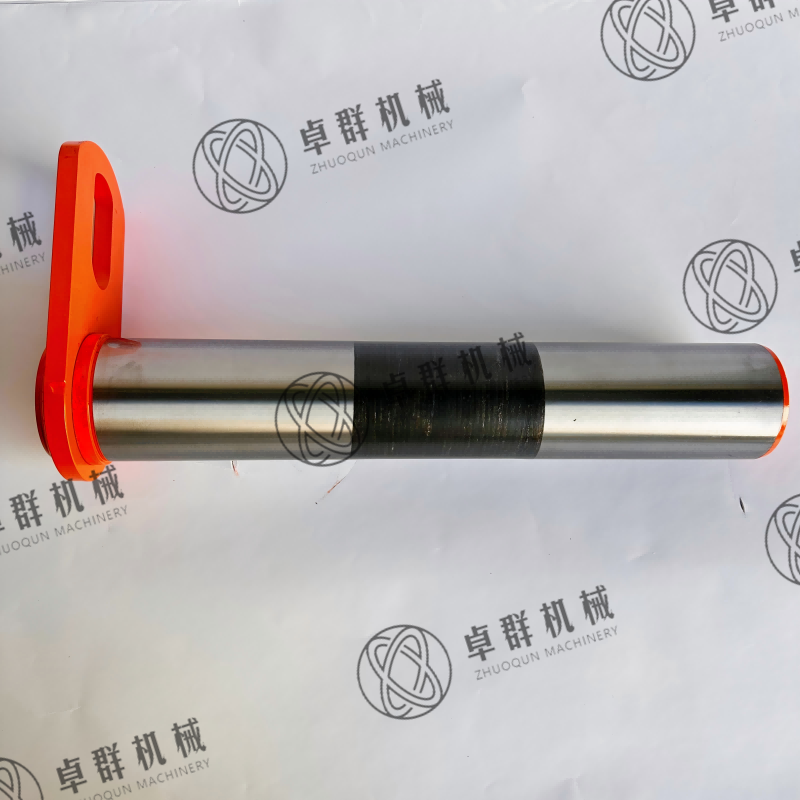
Manufacturing capabilities dictate the ultimate quality of the product. You must evaluate a custom pin shaft supplier on their advanced CNC turning and precision grinding centers. Do they handle secondary operations smoothly? Having in-house heat-treatment capabilities is a massive advantage. Controlling the thermal process internally prevents logistical delays and ensures stricter quality oversight compared to outsourcing to third-party metallurgists.
Quality certifications act as non-negotiable industry standards. You should look for strict procedural compliance. ISO 9001:2015 serves as the baseline for general manufacturing. If you operate in highly regulated sectors, demand specialized credentials. Look for AS9100 for aerospace applications or IATF 16949 for automotive assemblies. These certifications prove the facility maintains rigorous corrective action procedures and defect prevention systems.
Prototyping and lead times define the agility of the partnership. Assess the supplier's ability to produce rapid prototypes. You need physical components for real-world fit-and-function testing before committing to high-volume production. A capable partner dedicates specific machines to quick-turn prototyping, ensuring your product development cycle does not stall waiting for test articles.
Best Practice: Always request a facility tour, whether physical or virtual. Observing their tool-crib organization, scrap material management, and gauge calibration records tells you immediately how seriously they take precision engineering.
Upgrading to a tailored solution is a strategic decision protecting the fundamental integrity, safety, and performance of proprietary machinery. Generic fasteners compromise brilliant engineering. By carefully specifying material grades, surface finishes, and strict tolerances, you eliminate hidden vulnerabilities within your mechanical assemblies. Understanding the true lifecycle value makes justifying initial tooling costs straightforward. Prioritizing strict quality control and traceability ensures long-term operational success.
The transition requires proactive collaboration between your engineering and procurement teams. To move forward effectively, we recommend taking the following actions:
A: Standard timelines vary based on complexity. Initial tooling and engineering usually take 2 to 4 weeks. Producing rapid prototypes adds another 1 to 2 weeks. Once you approve the First Article Inspection (FAI), full production runs typically require 4 to 8 weeks. In-house heat treatment and plating capabilities can significantly reduce these lead times.
A: Yes. Requesting prototypes is highly recommended. It allows your engineering team to conduct real-world fit-and-function testing. Validating the component through a First Article Inspection prevents expensive errors. It ensures the design seats perfectly in your assembly before you invest in high-volume production.
A: Material selection depends entirely on application stress. We frequently use 4140 alloy steel for extreme shear strength and heavy loads. For corrosive environments, 304 or 316 stainless steel provides excellent protection. We also machine brass or bronze for specialized applications requiring lower friction or non-sparking characteristics.
A: Standard commercial fasteners utilize loose general tolerances, often fluctuating by several thousandths of an inch. This causes vibration and premature wear. Custom machining shifts to tight-tolerance precision grinding. We routinely achieve tolerances within a few ten-thousandths of an inch, ensuring perfect interference fits and optimal mechanical stability.