+86-17692703999
+86-17692703999 No. 6, West Side Auxiliary Road,
Sunshine Street, Linxi County, Xingtai
City, Hebei Province
Sunshine Street, Linxi County, Xingtai
City, Hebei Province

Views: 0 Author: Site Editor Publish Time: 2026-10-31 Origin: Site

Is your heavy equipment moving loosely? Oval wear on linkage joints destroys digging precision. This uneven deformation ruins expensive machine connections. It leads to sloppy bucket movements and jarring vibrations in the cab. But why does this specific damage occur instead of the metal wearing down evenly?
In this comprehensive guide, we break down the mechanical forces causing this frustrating issue. You will learn how to identify early warning signs from a field engineer's perspective. Furthermore, we detail the severe financial consequences of ignoring the problem. Most importantly, we share proven prevention methods and metallurgical upgrades to keep your machinery on the job site.
Earthmoving equipment relies on a complex system of articulated steel linkages. These connections perform grueling tasks day in and day out. The primary pivot points connect the mainframe, boom, arm, bucket, and hydraulic cylinders.
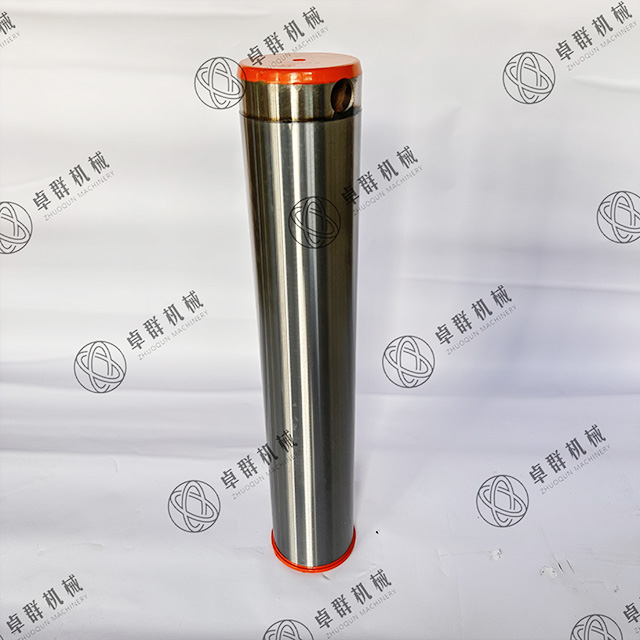
The core function of an excavator pin shaft is to serve as the critical structural hinge. These solid cylindrical steel rods allow massive arms and buckets to articulate smoothly. Simultaneously, they bear extreme shear forces and massive payload weights during heavy trenching.
These rods never operate in isolation. They work in direct synergy with replaceable cylindrical sleeves inserted into the parent metal. The rod rotates inside this sleeve. Together, they absorb immense friction and dynamic loads. They act as sacrificial layers protecting the permanent steel structure of the machine from severe abrasion.
When fleet managers inspect worn linkage components, they rarely see perfect circles. Instead, the parts stretch into distinct oval or egg shapes. This phenomenon is deeply rooted in the physics of excavation.
During standard trenching operations, the machine performs highly repetitive motions. When an operator pulls dirt toward the cab, hydraulic force presses the hinge rod aggressively against one specific side of the sleeve. The load is never distributed equally around the 360-degree circumference. The resistance of compacted earth always pushes back against the digging direction. Consequently, mechanical stress remains concentrated on a single focal point.
This constant one-sided pressure creates localized friction. Over hundreds of operating hours, this concentrated force grinds away the metal unevenly. The load-bearing side flattens out. Meanwhile, the corresponding side of the hole stretches outward. A vehicle wheel axle spins a full 360 degrees to distribute friction evenly. In contrast, an excavator joint only pivots back and forth within a highly restricted range, typically between 90 to 120 degrees. It never completes a full rotation. The exact same small surface area absorbs the brunt of the friction day after day. Without proper mitigation, oval deformation becomes an inevitable mechanical outcome.
Unidirectional physics dictate why the wear is oval. However, external factors determine how fast that deformation occurs. Identifying root causes is the first step in extending equipment lifespan and reducing maintenance overhead.
Improper lubrication remains the leading cause of premature failure. Grease serves as a vital hydrodynamic film separating the steel components. When operators skip daily greasing, this protective barrier breaks down. Severe metal-on-metal contact ensues. The friction coefficient skyrockets, generating intense heat. This heat softens the steel and leads to rapid microscopic tearing of the surface layer.
Earthmoving machines are engineered for linear, front-to-back digging motions. They are not designed to handle severe lateral forces. Sweeping heavy debris with the side of the bucket puts unnatural bending moments on the joints. Attempting to pry large boulders laterally has the same effect. This side-loading concentrates extreme pressure on the very edges of the sleeves, expediting deformation.
Picture the gritty environment of an active quarry. Silica dust coats every surface. When seals fail, abrasive contaminants infiltrate the microscopic space inside the joint. These particles are often harder than the steel itself. They mix with the grease to form a highly abrasive lapping paste. This paste grinds away the metal with every single movement of the boom.
Metallurgical composition heavily influences longevity. To reduce upfront costs, some owners install cheap aftermarket parts made from basic carbon steel. These unhardened components lack the necessary yield strength. They cannot withstand the immense shear forces of hydraulic excavation. Under heavy loads, low-quality steel physically yields and deforms rapidly.
Replacing only half of a worn joint is a critical maintenance error. Installing a brand-new rod into an already oval-shaped sleeve guarantees poor surface contact. The force concentrates on two microscopic points rather than distributing across a wide area. This point-loading causes the new component to fail almost immediately upon resuming work.
Detecting dimensional changes early prevents catastrophic linkage failure. Maintenance personnel must routinely monitor machines for specific physical and auditory indicators during their daily walkarounds.
The most obvious physical sign is excessive slop in the linkages. Rest the bucket lightly on the ground and gently tap the hydraulic controls. Watch the joints closely. If the bucket wiggles side-to-side, the excavator arm cylinder pin has likely egged out. A visible delay between hydraulic cylinder movement and actual arm movement is another major red flag.
Auditory signals are equally telling. Transition from a pushing motion to a pulling motion while sitting in the cab. Listen for loud banging or clunking noises. These sounds indicate the metal is physically bouncing across the empty gap inside an ovalized hole. In addition, pay attention during routine greasing. If fresh grease only escapes from one side of the joint while the other remains dry, the component is no longer sitting perfectly centered.
Delaying maintenance until the end of a project is a tempting but critical error. Ignoring the early stages of wear leads to exponential mechanical failures.
Initially, wear is confined to the sacrificial sleeve. As the ovaling becomes more pronounced, this sleeve can wear completely through or crack under uneven stress. The hardened steel then begins to grind directly against the softer parent metal of the boom or arm. This friction quickly elongates the mounting holes in the structural steel. A minor wear part issue suddenly transforms into a major structural defect.
Once the parent metal deforms, simply installing a new excavator cylinder pin is no longer an option. The new components will not fit tightly. The only solution is a highly specialized machining process known as line boring. A technician must bore out the damaged hole, weld new steel to build it back up, and bore it a second time to factory specifications. This process keeps a machine out of commission for days and costs thousands of dollars.
Beyond repair costs, loose linkages ruin digging performance. Hydraulic cylinders must move further just to take up the slack before moving the arm. This wasted motion reduces maximum breakout force. It increases cycle times and drives up daily fuel consumption across the entire fleet.
In recent years, the heavy construction sector has fundamentally changed how equipment fleets manage linkage wear. Driven by global supply chain delays and soaring replacement machinery costs, fleet managers are abandoning the outdated run-to-failure model. Predictive maintenance strategies are now the industry standard.
Modern excavators increasingly feature advanced telematics. These systems track exact operating hours and load stresses. They alert maintenance crews exactly when specific joints require inspection based on actual workload rather than a generic calendar.
Furthermore, there is a massive industry-wide shift toward advanced metallurgy. Contractors realize that cheap, unhardened aftermarket parts cost more in the long run. Investing in premium, heat-treated steel upfront drastically reduces total cost of ownership. It effectively prevents dreaded line-boring repairs and maximizes machine uptime in harsh environments.
To combat relentless friction, metallurgical engineers utilize advanced manufacturing techniques. Upgrading to specialized materials is the most effective strategy for preventing premature wear.
Standard aftermarket options are often machined from basic 45# carbon steel with no thermal treatment. In contrast, a premium high hardening excavator pin is forged from high-grade alloy steel like 40Cr. The critical differentiator is the induction hardening process. The outer surface is rapidly heated by an electromagnetic field and immediately quenched.
This creates a dual-property structure. The hardening penetrates the outer 2 to 3 millimeters, achieving a surface hardness of HRC 52-58. This outer shell acts as an impenetrable shield against abrasive dirt. Meanwhile, the inner core remains ductile. It absorbs massive shock impacts without fracturing.
| Feature | Standard Carbon Steel | High Hardening Alloy like 40Cr |
|---|---|---|
| Surface Hardness | Low, prone to rapid scoring | HRC 52-58, exceptional wear resistance |
| Core Toughness | Rigid and brittle under shock | Highly ductile, absorbs heavy impacts |
| Treatment Process | None or basic machining | Medium-frequency induction hardening 2-3mm depth |
| Best Application | Light-duty, temporary fixes | Heavy-duty trenching, mining, rock breaking |
When selecting replacement parts, always verify the material grade and hardening depth. Look for OEM-spec tolerances to ensure a perfect fit that distributes hydraulic loads evenly across the joint.
Even the highest quality metallurgical components succumb to wear under abusive conditions. Maximizing lifespan requires disciplined daily care and proper operator training.
Lubrication is your primary defense. Enforce a strict daily greasing schedule. Operators should grease the machine at the end of their shift while the metal is still warm. Warm grease flows easily and pushes out trapped dirt before it settles overnight. Pump the grease gun until clean grease visibly purges from the seals.
Operator technique plays a crucial role. Train your crew to avoid side-loading the boom. Smooth, linear movements preserve the mechanical geometry of the pivot points. Finally, adhere to the golden rule of heavy mechanics. Always replace mating parts simultaneously as a matched set. This ensures proper surface contact and prevents immediate point-loading damage.
Oval wear on linkage components is a costly reality of heavy earthmoving. It is driven by the intense, unidirectional forces required to dig and lift. You cannot change the laws of physics, but you can control how your machine handles them.
Maintaining a strict lubrication schedule and operating the machine smoothly drastically extends equipment lifespan. Responding immediately to early signs of slop prevents minor issues from escalating into major structural defects.
When routine maintenance is due, protect your investment by choosing premium hardened steel replacements. Quality metallurgy keeps your excavator working efficiently. It prevents catastrophic damage and ensures your machinery stays on the job site. Ready to upgrade your linkages? Explore the extensive catalog of precision-engineered components at MAPartsIntl to find the exact match for your fleet's specific needs.
Under standard conditions, grease the pivot points every 10 to 50 operating hours. This typically aligns with a daily maintenance routine. If the machine operates in deep mud or abrasive sand, greasing must occur multiple times a day. The goal is to use fresh grease to physically purge abrasive dirt out of the cavity before it scores the metal.
An oval-worn linkage rod cannot be safely or economically repaired. It must be replaced entirely. Attempting to weld and re-machine a worn part destroys its heat treatment and structural integrity. Reusing a deformed component alters load distribution, which rapidly destroys surrounding parts and damages the parent metal.
The primary differences lie in alloy composition and thermal treatment. A standard part is machined from basic carbon steel with minimal friction resistance. A hardened version undergoes precision induction hardening. This creates a dual-layer structure featuring a highly wear-resistant outer shell and a shock-absorbing inner core.
Cylinder connection points endure intense, concentrated dynamic forces. They serve as primary transfer points for massive hydraulic pressure. Because they handle the peak load of breakout force repetitively, friction concentrates on a tiny surface area. This accelerates deformation if maintenance is neglected.
If the parent metal of the boom or arm is ovalized, line boring is required. This specialized machining process typically costs between $1,500 to $3,000 per hole, depending on machine size and damage severity. This does not include the cost of downtime, which can easily double the overall financial impact.
Absolutely. A severely worn sleeve creates excessive clearance. This allows the steel rod to slam back and forth during operation. The resulting impact forces accelerate the deformation of both components, quickly turning a round profile into a distinct egg shape.